Understanding Modern DJ and MC Packages for Weddings
DJ and MC packages for weddings usually combine four essentials: venue-sized sound equipment, wireless microphones for vows and toasts, dance floor lighting, and MC coordination that keeps the timeline moving. Before booking, compare package tiers by guest count, room layout, and coverage hours: essential receptions often sit around $1,400 to $1,800, mid-range setups around $1,900 to $2,600, and premium production packages from about $2,700 to $4,500+. Most couples can use one skilled DJ/MC, while larger or multi-room events may benefit from a separate emcee and DJ. Investing in professional wedding DJ & MC services means choosing a team that manages both technical sound design and the emotional arc of your event.
At a modern wedding, music and announcements help set the rhythm of the day. A successful celebration relies on smooth reception coordination, careful management of your run sheet—the event timeline and cues—and clear sound.
Great entertainment means understanding your guests and keeping them engaged. While one half of the job involves beatmatching—aligning the tempos of two tracks for a smooth transition—mixing tracks, and reading the energy of the room, the other half requires confident, clear microphone work. An experienced host guides guests naturally from cocktail hour to dinner, introduces toasts with confidence, and directs attention to the cake cutting without awkward pauses.
Behind the scenes, the operator coordinates directly with your wedding planner, photographer, videographer, and catering captain. Before introducing the father-of-the-bride toast, for example, the host confirms that the photographer is in position and champagne flutes are filled. This structural coordination prevents logistical delays and ensures that every moment unfolds effortlessly.
Core Inclusions in Standard DJ and MC Packages
When comparing baseline packages, it helps to understand what a professional sound provider considers standard. A complete package should cover every fundamental element required to deliver a polished reception without hidden logistical fees.
Standard packages generally include:
- Performance Hours: A dedicated block of continuous coverage, typically starting at 4 to 6 hours for the reception, or all-day coverage depending on the agreement.
- Professional PA (Public Address) Systems: Speaker setups sized to your guest count and how sound behaves in your room, using equipment from brands like Bose or JBL so guests can hear speeches and music clearly.
- Microphones: Dedicated wireless handheld microphones for toasts, speeches, blessings, and announcements.
- Dance Floor Lighting: Sound-activated or dynamic dance floor wash lighting to create energy once open dancing begins.
- Full Setup and Teardown: Adequate setup time (typically arriving 1.5 to 2 hours before guest arrival) and full teardown included without extra hourly labor charges.
- Planning Portals: Digital tools that allow you to build timeline cues, map out must-play tracks, and list do-not-play songs.
Choosing comprehensive DJ services ensures that all sound engineering, background music curation, and room management are handled under one agreement.
Dual-Role DJ/MC vs. Separate Event Hosts
One of the most common planning questions is whether to hire a single professional to handle both music and hosting duties or book two separate individuals.
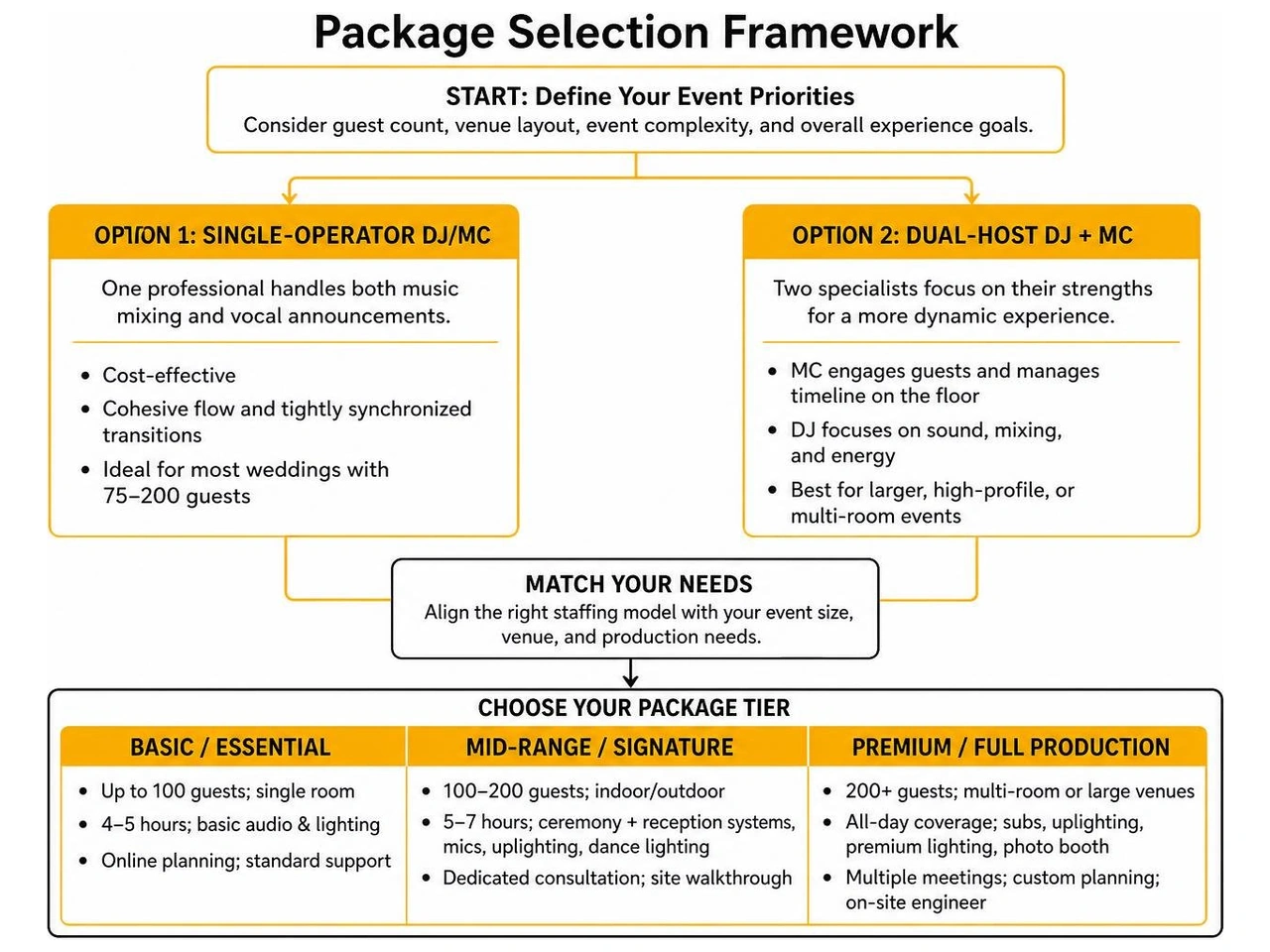
A single-operator DJ/MC handles both music mixing and announcements. This setup can be cost-effective and help create a cohesive flow. Because the person speaking into the microphone also controls the music, they can coordinate transitions closely. When welcoming the newlyweds into the room, for example, they can raise the intro music as the doors open, lower the music volume smoothly during the announcement, and bring in the beat as the couple reaches the center of the dance floor.
For high-profile celebrations or complex multi-room events, hiring a dedicated event emcee alongside a primary DJ can provide distinct advantages. With separate hosts:
- The MC remains on the floor, interacting directly with guests, checking in with speakers, and managing the timeline face-to-face.
- The DJ stays focused on sound levels, live audio mixing, reading dance floor reactions, and checking wireless microphone channels for interference.
For most weddings with 75 to 200 guests, a skilled single-operator DJ/MC delivers exceptional results. For larger galas, corporate fundraisers, or expansive multi-room venues, splitting the roles allows each professional to focus entirely on their specialty.
Comparing Tiers of DJ and MC Packages: Cost vs. Value
Wedding entertainment pricing varies depending on equipment scale, event length, and production design. In the broader event industry, wedding packages generally range from $1,400 to $3,500 for standard to mid-tier offerings, while high-end or all-inclusive production packages can run from $3,500 to upwards of $6,000.
Evaluating wedding DJ cost comes down to understanding the differences in hardware, operational labor, and multi-location logistics across package tiers.
| Package Tier | Typical Price Range | Ideal Guest Count / Venue Type | Core Features & Equipment Included | Planning & Coordination Level |
|---|---|---|---|---|
| Basic / Essential | $1,400 – $1,800 | Up to 100 guests; single indoor room | 4–5 hours reception coverage; 2 top speakers; 1 wireless mic; basic dance lighting | Online planning form; standard email support |
| Mid-Range / Signature | $1,900 – $2,600 | 100–200 guests; indoor/outdoor split | 5–7 hours coverage; ceremony system + reception PA; wireless lapel & handheld mics; uplighting (8–12 fixtures); dance lighting | Dedicated timeline consultation; venue site walkthrough; direct planner sync |
| Premium / Full Production | $2,700 – $4,500+ | 200+ guests; multi-location or large estates | All-day coverage; multi-room audio; subwoofers; full wireless uplighting; premium dance lighting; photo booth; backup operator on call | Multiple planning meetings; custom audio edits; personalized script development; on-site sound engineer |
Essential vs. Premium DJ and MC Packages
When exploring customizable packages, the difference between tiers goes beyond performance hours—it directly affects the acoustic and visual transformation of your venue.
An Essential Package is designed for streamlined, single-room receptions. It utilizes a pair of high-clarity, full-range speakers that provide clear speech delivery during dinner and comfortable volume levels for dancing. This tier suits intimate venues, winery barrel rooms, or private estate dining rooms where separate audio stations are unnecessary.
A Premium Package adds sound coverage and lighting options for larger venues. Spaces such as historic barns, high-ceiling ballrooms, and outdoor tented lawns may benefit from subwoofers—speakers dedicated to deep bass. These let the main speakers, sometimes called top speakers, focus on vocals and other sounds, helping keep the music clear. Premium tiers may also include speakers placed around the venue so guests at the back can hear toasts clearly without making the sound too loud for those seated near the DJ booth.
Key Factors That Influence Total Booking Costs
Several variables affect the final investment for your event entertainment:
- Event Duration and Timeline Spread: Total hours on-site affect staffing requirements. An 8-hour day covering an off-site ceremony, garden cocktail hour, and ballroom reception requires more setup and coordination than a standalone 4-hour evening party.
- Travel Distance and Regional Logistics: Venues well outside metropolitan hubs may incur travel fees to cover transit time, mileage, and accommodations for production crews.
- Sound, Noise Limits, and Power: Outdoor tents, open-air lawns, and historic properties may have strict noise limits or few available electrical outlets or circuits. Ask whether your provider needs battery-powered speakers for separate areas, such as a ceremony lawn or cocktail patio, or other specialized equipment.
- Date and Demand: Peak wedding seasons (such as May–June and September–October) can bring higher booking rates than off-peak winter dates or mid-week bookings.
- Specialized Mixing Needs: Hiring a dedicated wedding reception DJ who can blend diverse musical traditions (such as Latin, Afrobeats, South Asian, or classic soul) may involve additional music selection and preparation.
Essential Add-Ons and Production Enhancements
Beyond standard sound equipment, production enhancements allow you to tailor the atmosphere of your venue to match your design aesthetic.
Investing in a dedicated wedding DJ & lighting package helps unify your audio and visual design under one coordinated production team.
Ceremony Audio and Multi-Location Sound
A common technical misstep at weddings is attempting to run ceremony audio, cocktail hour music, and reception sound from a single speaker system. Moving heavy speakers between spaces during the event creates disruptive noise, risks delays, and leaves gaps in background music.
A multi-location audio setup addresses this by placing dedicated systems in each area:
- Ceremony Sound Station: A discreet, compact PA (public address) system includes a dedicated wireless lapel microphone (also called a lavalier), clipped discreetly to the officiant's clothing, and a wireless handheld mic on a stand for readings or musical performances.
- Cocktail Hour Station: A standalone, battery-powered speaker positioned on a patio or courtyard delivers background playlists while the main reception room remains powered and ready.
- Reception Main Stage: The primary high-output sound system with subwoofers and lighting stays in place, ready for the grand entrance.
Working with a professional mobile DJ ensures clean, independent sound across every phase of the venue without awkward transitions or visible cables.
Uplighting, Special Effects, and Interactive Extras
Production add-ons can help you personalize the atmosphere of your venue:
- Wireless Uplighting: Battery-powered LED lights controlled wirelessly through DMX, a system that coordinates lighting colors and effects, wash walls and architectural features in colors matching your wedding palette. During open dancing, compatible uplights can be programmed to pulse in sync with the beat.
- Dance Floor Effect Lighting: Lights with rotating heads, bars that spread color across the dance floor, and subtle flashing effects add energy. Ask how they will be positioned to avoid shining directly into guests' eyes or interfering with photography.
- Cold Sparks & Low-Lying Fog: Cold spark fountains or dry-ice fog machines can create a visual backdrop for your first dance or grand exit. Confirm venue approval and the provider's safety requirements before booking these effects.
- Photo Booths & 360 Video Booths: Interactive photo stations offer print keepsakes or instant social media sharing, keeping non-dancing guests entertained throughout the evening.
- Custom Monograms: High-output projectors display your personalized initials or wedding date across the dance floor or feature walls.
How to Vet and Select Your Entertainment Team
Your DJ and MC establish the tone of your reception. Choosing the right team requires looking beyond standard marketing materials to evaluate their technical capabilities, musical range, and live speaking style.
When reviewing wedding entertainment solutions, ask to see unedited performance footage or video introductions. Pay close attention to the host's tone of voice. A great MC maintains a warm, polished, and articulate delivery, avoiding over-the-top gimmicks, cheesy jokes, or unnecessary chatter over the music.
Critical Questions to Ask Before Signing
Before securing your date with a deposit, review these critical operational details with your prospective provider:
- Will the person we speak with during planning be the exact DJ/MC on-site at our wedding?
- What brand and model of sound equipment do you use, and do you configure system sizing specifically for our venue’s acoustics?
- How do you manage song transitions—do you live-mix tracks seamlessly, or do you rely on pre-made fading playlists?
- How do you handle guest requests that fall onto our specified do-not-play list?
- What are your precise overtime rates if our party extends beyond the contracted time?
- Can you provide proof of comprehensive commercial liability insurance ($1M–$2M coverage), as required by most professional venues?
Backup Plans: Spare Equipment and Replacement DJs
Equipment problems can happen, so ask how your sound provider plans backups for equipment, power, and staffing. Useful details to discuss include:
- Backup Equipment: Ask whether your DJ brings backup laptops, extra drives for music files, spare audio interfaces (devices connecting the computer to the sound system), backup wireless microphone receivers, and spare cables. If a mixer channel or laptop develops a glitch, ask how quickly they can switch to a backup audio source.
- Power Management: Ask whether battery backup units (uninterruptible power supplies) are included to help protect systems from sudden venue voltage drops or temporary generator fluctuations.
- Backup DJs: Ask whether your provider maintains an on-call emergency DJ roster. If your lead DJ faces a sudden medical emergency, confirm how a replacement host would receive your finalized timeline, playlists, and pronunciation guides.
Booking Lead Times and Music Planning Workflow
High-demand wedding professionals manage limited event dates each year. Understanding the planning timeline ensures you secure your preferred talent and build your soundtrack methodically.
Recommended Booking Lead Times for 2026 and 2027 Events
Peak weekend wedding dates—particularly Saturdays in spring and autumn—routinely book 12 to 18 months in advance. Couples planning 2026 and 2027 celebrations at popular venues should secure their entertainment provider shortly after confirming their venue and wedding coordinator.
Standard booking procedures involve reviewing a detailed proposal, signing an agreement covering performance hours and equipment inclusions, and submitting an initial retainer (typically 20% to 50%) to lock in the calendar date.
Step-by-Step Music Planning and Cue Coordination
Building your wedding soundtrack is a collaborative process. Rather than selecting every individual song for a four-hour dance party, your role is to define the boundaries of your musical taste while letting your DJ read the room live.
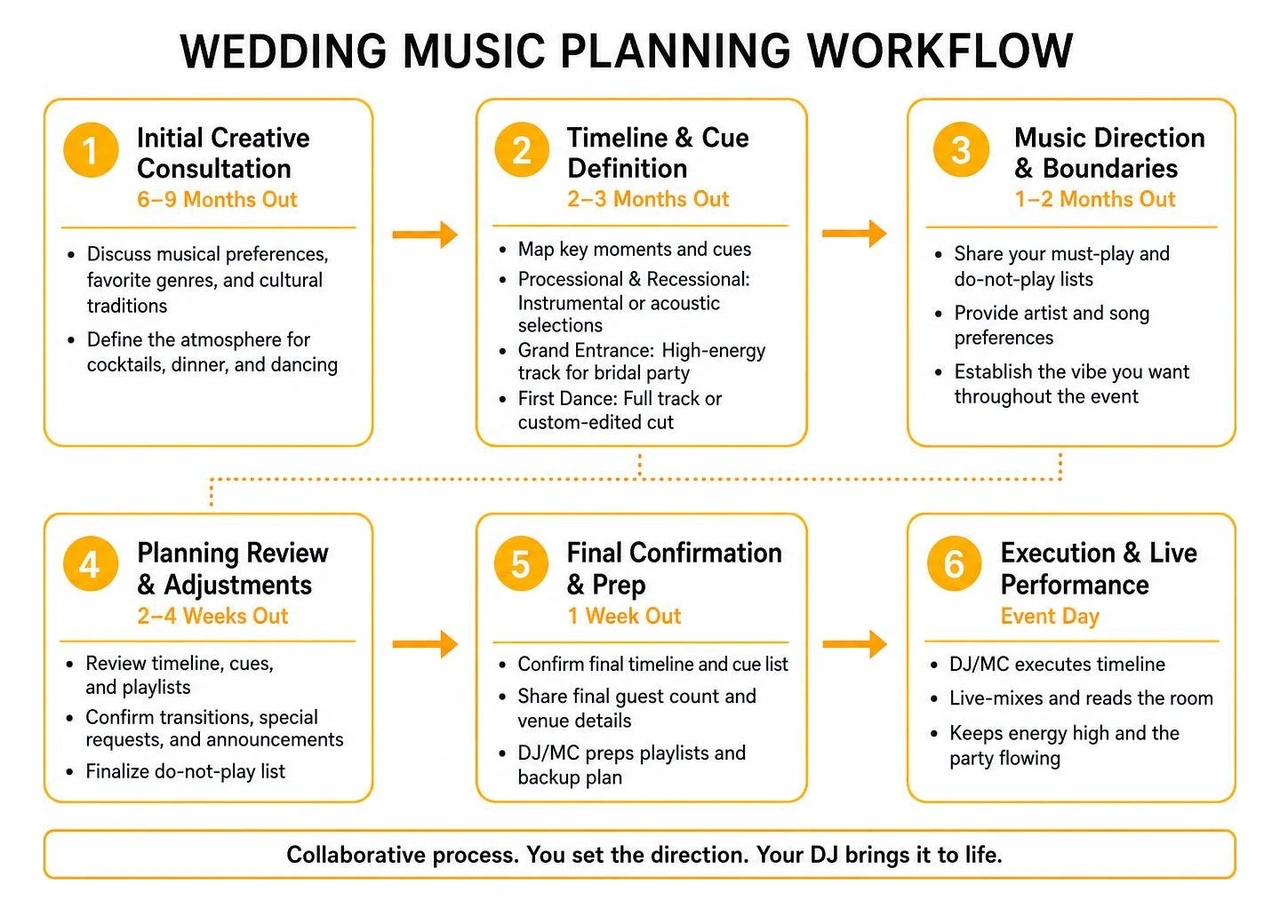
- Initial Creative Consultation (6–9 Months Out): Discuss your overall musical preferences, favorite genres, cultural traditions, and the atmosphere you envision for cocktails, dinner, and dancing.
- Timeline & Cue Planning (2–3 Months Out): Map your key moments:
- Ceremony Entrance & Exit Music: Choose specific tracks or versions for the processional (entrances) and recessional (the exit after the ceremony).
- Grand Entrance: Choose a high-energy track matched to the wedding party's entrance style.
- First Dance: Choose the full track or a custom-edited cut if you'd prefer a shorter dance.
- Parent Dances: Choose traditional selections, mashups, or points where the music should fade out.
- Cake Cutting & Bouquet/Garter Events: Choose upbeat background tracks for any of these moments you plan to include.
- Last Dance & Exit Song: Choose high-energy group singalongs or an intimate private last dance.
- Custom Song Lists (4–6 Weeks Out): Submit your Must-Play list (10–15 tracks that define your celebration), Play-If-Possible selections, and your strict Do-Not-Play list.
- Final Timeline & Pronunciation Review (1–2 Weeks Out): Walk through the final run sheet—your event timeline and cues—step-by-step with your DJ/MC, confirming how to pronounce every wedding party member's name and writing it out as it sounds.
Frequently Asked Questions About Wedding DJ and MC Services
What is the difference between a DJ and an MC?
A DJ (Disc Jockey) handles the music and sound for your event. They manage the sound equipment, select and mix tracks, match tempos, adjust equalization—the balance of bass, middle, and high frequencies—and read the crowd to keep energy high on the dance floor.
An MC (Master of Ceremonies) is the official host and public voice of your reception. The MC welcomes guests, manages the timeline, introduces VIP speakers, coordinates with photographers and caterers before major events, and makes clear, well-timed announcements to guide the room smoothly.
Can we choose all of the songs for our reception?
You have complete control over the musical direction of your wedding day. Through online planning portals, you can specify your must-play tracks, preferred genres, and songs you never want to hear.
However, we recommend providing a curated list of 15 to 20 favorite dance tracks rather than programming every minute of the night. Leaving room for your DJ to read the dance floor allows them to adapt to guest reactions, mix in relevant requests, and build organic energy while staying firmly within your chosen style.
How early does the DJ arrive to set up?
Professional sound teams typically arrive at the venue 1.5 to 2 hours prior to guest arrival, or earlier for complex multi-room setups. Confirm the arrival time and venue access with your provider so there is time for speaker setup, checks for wireless microphone interference, volume adjustments, and lighting tests before guests arrive, helping the celebration start smoothly.
Conclusion
Your wedding entertainment shapes how your guests experience your celebration, from the emotion of the ceremony vows to the final song on a packed dance floor. Investing in a professional DJ and MC package provides clear sound engineering, organized timeline management, and a lively celebration tailored to your musical tastes.
Blue Ridge Sound is an event sound team based in Charlottesville, VA, serving Central Virginia, including Albemarle County, Crozet, Waynesboro, Staunton, Harrisonburg, Ruckersville, Scottsville, and the Shenandoah Valley. We provide professional JBL and Bose PA (public address) systems—speakers and microphones for event sound—with full setup-to-teardown service for wedding ceremonies, reception DJ/MC and sound, corporate events and audiovisual (AV) support, live band support, lighting and uplighting, and no-power solutions for barns, vineyards, and outdoor venues. With sound systems sized for your venue and clear, all-inclusive proposals, our team helps your wedding run smoothly from start to finish. If your celebration features a mix of live instruments and curated DJ sets, explore our live sound support and production options. Ready to plan your wedding sound? Request a quote at blueridgesound.net or call (434) 872-1893.