

Why Professional Audio-Visual Support is Vital for Weddings
Hiring a wedding AV technician means bringing in a dedicated live audio engineer who handles acoustic calibration, wireless RF management, gain staging, and seamless multi-zone coordination from your ceremony through the final dance. That technical support protects the moments that only happen once. When you exchange personal vows on a breezy hillside or a parent delivers a heartfelt toast during dinner, there is no option to pause, rewind, and re-record. Professional audio-visual support helps every guest hear every word with clear, controlled sound, free from harsh distortion or sudden ear-piercing squeals.
Achieving clear audio requires far more than placing a powered speaker on a stand and turning up the volume. Professional audio engineers use acoustic modeling and venue analysis to calculate how sound waves behave in specific environments. Indoors, hard surfaces like glass windows, hardwood flooring, and exposed brick reflect sound, turning emotional speeches into an echoey, unintelligible wash. Outdoors, open air and wind disperse high frequencies quickly, leaving guests in the back rows straining to catch the ceremony.
Investing in a dedicated wedding ceremony audio rental supports speech intelligibility across the entire seating area. An experienced engineer manages gain staging, applies surgical equalization to reduce feedback before it starts, and dynamically mixes vocal levels so quiet whispers and loud cheers remain balanced. The Audio Engineering Society publishes technical standards and resources on sound reinforcement practices that inform this kind of live event work.
Consolidating your audio, lighting, and technical needs under a single experienced production team prevents the miscommunications common to fragmented vendor setups:
| Production Model | Technical Coordination | Equipment Compatibility | On-Site Troubleshooting | Point of Contact |
|---|---|---|---|---|
| Full-Service AV Production | Unified run-of-show; single team manages audio, visual, and lighting transitions. | Fully integrated, tested hardware; zero interface or cabling mismatches. | Dedicated live engineer actively monitors frequencies, power, and gain. | Single dedicated lead handling all technical logistics. |
| Fragmented Multi-Vendor Setup | Multiple parties (DJ, band, videographer, venue) operating independent systems. | Risk of ground loops, buzzes, and mismatched signal paths between vendors. | Divided responsibility; vendors often blame third-party gear during failures. | Multiple independent contacts requiring couple or planner coordination. |
Solving Complex Venue Acoustics and Power Constraints
Central Virginia features some of the country's most stunning wedding settings, from historic manor estates to rustic Shenandoah Valley barns and working vineyards in Albemarle County and Nelson County. However, these picturesque locations present distinct acoustic and electrical obstacles.
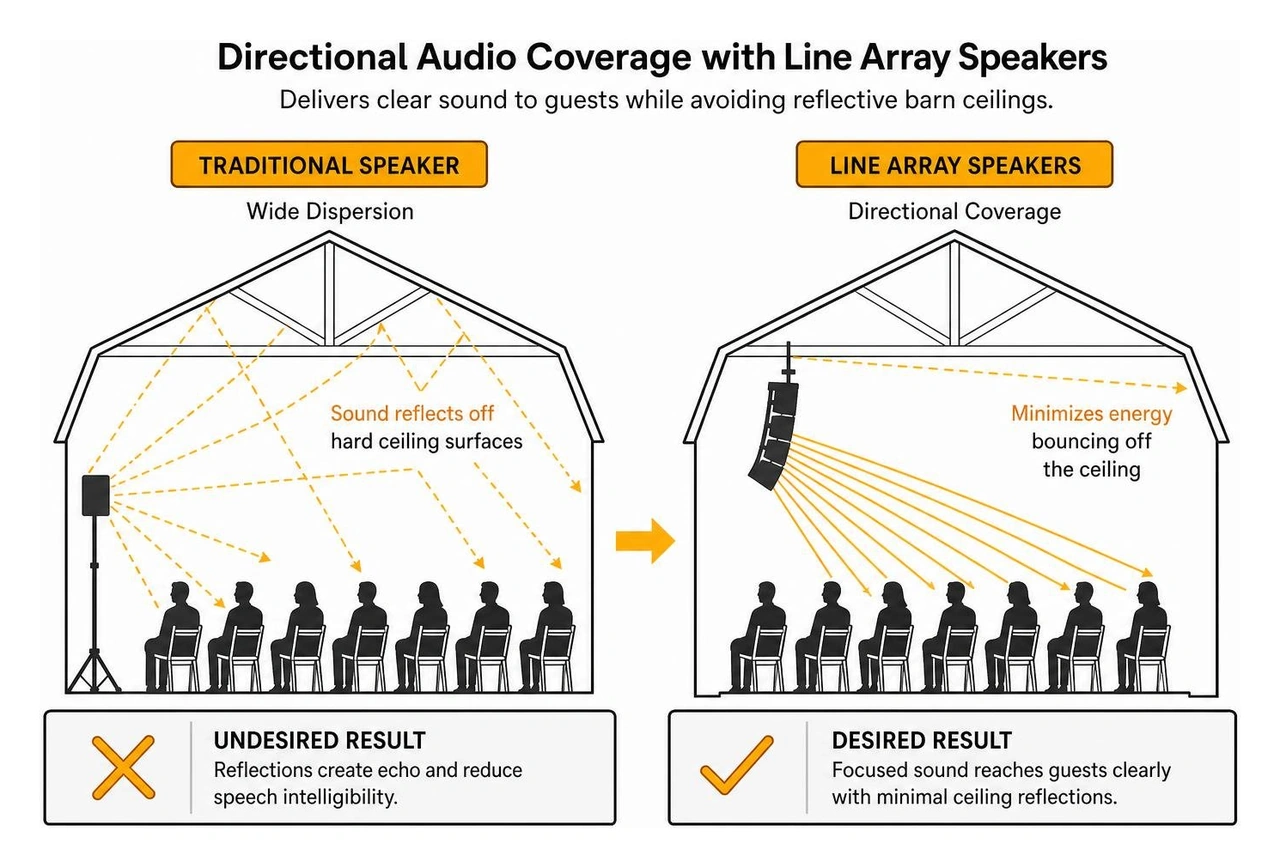
Historic timber barns and event pavilions with soaring, uninsulated ceilings bounce acoustic reflections unpredictably. Deploying wide-dispersion column speakers and compact line-array systems directs sound precisely at the seated audience while minimizing the energy bounced off hard rafters. Bose publishes technical documentation on its column array and line array loudspeaker systems, which are commonly used to control coverage in reflective spaces.
Outdoor celebrations require a purpose-built sound system capable of delivering rich, articulate audio across wide lawn expanses without blasting front-row guests.
Power availability is another critical challenge at rural or remote vineyard sites. Standard commercial sound and lighting setups draw substantial wattage that can trip residential-grade circuits. Professional AV technicians evaluate venue power draw in advance, balancing circuits across phases and deploying whisper-quiet inverter generators or dedicated battery-powered power stations for off-grid ceremony sites where running long extension cords across guest walkways is unsafe or visually unappealing. The National Fire Protection Association maintains electrical safety standards that guide temporary power distribution at events.
Managing Multi-Zone Sound from Ceremony to Reception
Most weddings do not happen in a single room. Your celebration moves dynamically from an outdoor ceremony lawn to a patio cocktail hour, and finally into a main tent or ballroom for dinner and dancing. Each phase requires a distinct audio zone tailored to the activity taking place.
A seamless transition between these spaces prevents awkward silences:
- Ceremony Zone: High-fidelity, discreet column speakers delivering focused vocal reinforcement for the officiant, couple, and ceremony musicians.
- Cocktail Hour Zone: Warm, distributed background audio that keeps energy high while allowing guests to converse comfortably without shouting.
- Main Reception Zone: Full-range reception sound featuring articulate tops for toasts, paired with dynamic subwoofers for dance floor impact and delayed fill speakers for balanced dinner coverage.
Managing multiple zones concurrently demands meticulous wireless management. Modern events feature dozens of smart devices, venue Wi-Fi routers, and videographer microphones competing for radio frequency (RF) bandwidth. The FCC wireless microphone operations guide explains the licensed and unlicensed spectrum rules that professional technicians use when coordinating frequencies. When coordinating wireless microphones, a professional technician scans the local RF spectrum on-site, locking in clean, interference-free frequencies so toasts and vows remain uninterrupted.
Step-by-Step Guide to Wedding AV Technician Hire

Hiring the right technical team involves evaluating operational competence, safety standards, and communication. A dedicated technician does not simply drop off gear; they actively manage the entire audio-visual environment from pre-event planning through the final dance. A thoughtful wedding AV technician hire gives couples one less thing to worry about on the big day.
When evaluating your wedding AV technician hire and production partner, follow these steps to secure dependable technical support:
- Conduct a Venue Assessment: Share your timeline, layout, and guest count with your sound team to determine speaker placement, throw distance, and power access points.
- Synchronize Vendor Timelines: Ensure your technician coordinates directly with your wedding planner, venue manager, videographer, and live musicians to map out audio feeds and cues.
- Schedule a Pre-Event Sound Check: Require an early load-in window so technicians can equalize the room and test every wireless transmitter well before guests arrive.
- Establish Live Mixing Protocols: Confirm that a live sound engineer will remain at the mixing console during critical transitions, vows, and speeches rather than leaving equipment on automated settings.
- Request a Custom Proposal: Once you've confirmed your venue details, request a custom proposal outlining labor, equipment, and setup so there are no surprises on event day.
Essential Checklist for Wedding AV Technician Hire
Before signing a contract, verify that your AV provider covers every technical base required for flawless execution:
- Dedicated On-Site Sound Engineer: A live technician dedicated exclusively to monitoring audio levels, battery life, and signal integrity throughout the event.
- Redundant Hardware Infrastructure: Immediate on-site access to backup digital mixers, spare wireless receivers, and secondary power supplies.
- Curated Speech Microphones: Professional speech microphones, including discreet lavaliers for officiants and rugged handheld cardioid mics with internal shock mounts for toasts.
- Pre-Event Site Survey: A thorough assessment of venue layout, acoustic surfaces, and electrical outlets in Charlottesville, Crozet, Waynesboro, or surrounding Central Virginia venues.
- Complete Setup and Teardown Service: Punctual load-in, taped-down cabling runs, and complete post-event strike handled without burdening the couple or bridal party.
Audio, Lighting, and Visual Integration
Modern weddings blend sound with atmospheric visual design to create an immersive experience. Integrating lighting directly with your audio production ensures aesthetic harmony across every transition of the night.
Professional wedding uplighting transforms reception ballrooms, rustic barns, and vineyard tents by painting architectural pillars, stonework, and fabric drapery in warm, customized color palettes. As dinner concludes and the dance party starts, intelligent dance floor lighting energizes the room with moving-head fixtures, wash lights, and textured patterns synchronized to the music.
For ceremonies and receptions featuring multimedia elements, AV technicians integrate low-profile projection screens or video monitors for photo slideshows, custom monograms, and architectural stage wash lighting that keeps the wedding party beautifully illuminated for photographers and videographers alike.
Key Logistics: Timing, Costs, and Redundancy Planning
Budgeting and scheduling your wedding production requires an understanding of what factors drive pricing and availability. Audio-visual production is customized based on venue dimensions, total guest count, indoor versus outdoor layouts, and the complexity of live performances.
System sizing directly reflects the space and audience:
- Under 100 Guests: Streamlined column array setups (such as Bose L1 or compact JBL systems) offering high fidelity with a small visual footprint.
- 100 to 250 Guests: Multi-speaker point-source or line-array systems with dedicated subwoofers, auxiliary delay speakers for large halls, and multi-zone distribution.
- 250+ Guests: Large-format line-array sound reinforcement, multi-channel digital audio consoles, advanced wireless antenna distribution, and comprehensive architectural lighting grids.
Evaluating your sound and lighting requirements alongside overall vendor coordination ensures that you receive transparent, all-inclusive value without unexpected logistical complications on event day.
Timing and Logistics for Central Virginia Weddings
Peak wedding season across Central Virginia—stretching through the picturesque spring and fall months from May to October—sees top event technicians booking out months in advance. Securing your technical team well ahead of your wedding date helps ensure calendar availability and allows ample time for venue walk-throughs and power assessments.
Transparent proposals detail labor hours, equipment configurations, setup, and teardown. Having clear communication from the start helps ensure that an active technician remains on-site during your reception toasts, formal dances, and live performances.
Handling Multicultural and Multi-Day Event Productions
Multicultural celebrations, including South Asian, Persian, and fusion weddings, feature rich traditions, live musical performances, and multi-day schedules that demand versatile audio engineering.
Events such as a Sangeet, Mehndi, or Baraat require dynamic, high-energy sound systems, mobile battery power for outdoor processionals, and specialized microphone configurations for traditional acoustic instruments like the dhol, sitar, or tabla. Persian ceremony spreads (Sofreh Aghd) benefit from low-profile, high-gain boundary microphones that capture soft recitations without blocking ornate table designs or floral arrangements.
Handling these complex, high-stakes celebrations requires careful multi-stage audio distribution, flexible digital routing presets, and an experienced technical team capable of balancing traditional live acoustic instruments alongside contemporary reception sets.
Seamless Coordination with Bands and Performers
Live musical performances add incredible energy to a wedding reception, but they also introduce intricate technical demands. Integrating a live band requires coordinated stage patching, dedicated monitor mixes, and precise front-of-house balancing so vocals soar over dynamic percussion and brass sections.
Couples looking for comprehensive sound engineering often pair reception production with dedicated live band sound support. A qualified live audio engineer ensures seamless transitions between live sets and background music playlists, preventing volume drops, feedback loops, or abrupt breaks in entertainment.
By managing microphone placement, multi-channel snake routing, and digital mixing consoles directly, your audio technician allows performers to focus purely on their music while maintaining optimal acoustic balance for every guest in the room.
Frequently Asked Questions About Wedding AV
How far in advance should we book an AV technician for a wedding?
We recommend securing your audio technician 9 to 12 months in advance, particularly if your wedding takes place during the busy spring or autumn seasons in Charlottesville, Albemarle County, or the Shenandoah Valley. Booking early helps secure gear availability and allows adequate time to conduct venue site surveys and power assessments.
What is the difference between a wedding DJ and an AV technician?
A wedding DJ primarily focuses on music programming, reading the dance floor, and Master of Ceremonies duties. An AV technician is a dedicated live audio engineer who manages physical acoustics, wireless radio frequencies, gain staging, multi-zone routing, and real-time mixing across all microphones and instruments.
What backup equipment does an AV technician bring on-site?
Professional event production relies on built-in redundancy. A standard on-site contingency kit includes backup digital consoles, redundant wireless handheld microphones, fresh battery banks, spare cabling, passive direct boxes, and uninterruptible power supplies (UPS) to protect against unexpected voltage fluctuations.
Ready to protect your vows and elevate your wedding celebration? Request your custom proposal online at Blue Ridge Sound.