
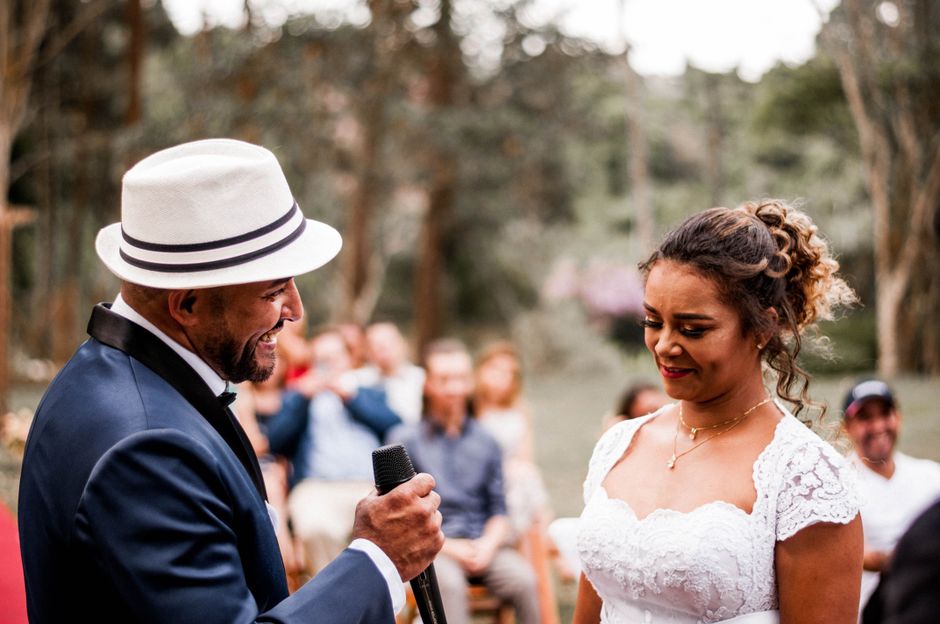
How Should You Plan a Wedding Microphone Setup Around the Voices Guests Need to Hear?
For a reliable wedding microphone setup, use a discreet wireless lavalier on the officiant, position dedicated vow amplification close to the couple, and provide a handheld mic for readers. Place main loudspeakers forward of all microphones, verify speech clarity from the guest seating area, and always stage a fully prepped backup system.
The ideal technical plan adapts to your venue layout. A reflective stone chapel and an open, breezy vineyard ceremony require distinct polar patterns, speaker dispersion angles, gain staging, and pre-ceremony audio checks. A dependable production focuses on four foundational pillars: deliberate microphone selection, intentional speaker placement, clean signal gain staging, and a comprehensive real-time sound check.
I'm Drew Edmondson, owner of Blue Ridge Sound in Charlottesville, and I coordinate wedding microphone setup and live event sound across Central Virginia. My planning starts with the acoustic realities of your venue and the specific voices your guests gathered to hear.

What Equipment Factors Shape a Wedding Microphone Setup?
Choosing the right ceremony microphones requires balancing physical mobility, visual aesthetics, wind resistance, and radio frequency stability. A wedding ceremony is an unrepeatable live event where vows, readings, and emotional pronouncements must carry clearly to every row.
Different microphone form factors serve specific roles across the ceremony staging:
| Microphone Type | Primary Strengths | Limitations | Best Ceremony Role |
|---|---|---|---|
| Wireless Lavalier (Lapel) | Hands-free operation, visually discreet on formal wear | Sensitive to clothing rustle and sudden wind gusts | Officiant, groom |
| Wireless Handheld | Natural vocal control, easy to pass between speakers | Visible in photos, requires deliberate mic handling | Guest readers, vows, reception toasts |
| Wireless Headset | Consistent capsule-to-mouth distance, high gain before feedback | Noticeable visual presence on the speaker's face | Officiants in windy outdoor settings |
| Wired Handheld | Total signal stability, no battery or RF interference risks | Restricted mobility, requires taped-down cable runs | Dedicated lecterns, fail-safe reception backups |
Capsule construction significantly influences clarity. Dynamic capsules manage high sound pressure levels and reject off-axis background chatter, making them ideal for handheld speeches and reception toasts. Condenser capsules provide enhanced sensitivity and an extended frequency response, which helps pick up quiet spoken vows from a lapel position when placed accurately.
When deploying wireless systems across venues in Albemarle County, Crozet, and the Shenandoah Valley, managing radio spectrum is essential. Local broadcast traffic can disrupt uncoordinated signals during critical vows. Coordinating channels ahead of time, as outlined in our guide to wireless microphone frequency coordination, keeps every transmitter clean through the ceremony. Following FCC wireless microphone guidelines ensures systems operate within legal UHF frequency bands without interference.
What Should the Officiant and Couple Microphones Accommodate?
The officiant requires complete physical freedom to hold celebration binders, turn script pages, and direct the couple during the ring exchange. A wireless bodypack transmitter paired with an omnidirectional or cardioid miniature lavalier pinned securely at center chest delivers balanced, natural amplification.
Fastening the capsule near the sternum maintains consistent vocal pickup while avoiding mechanical rustle against suit lapels, ties, or fine fabrics. In breezy outdoor venues, outfitting the capsule with a dense acoustic windscreen or discreet faux-fur deadcat prevents gust distortion. These placement choices help keep spoken words clear without drawing attention away from the ceremony.

What Audio Options Work for Readers and Toasts?
Family members and friends invited to read passages rarely possess professional microphone technique. A wireless handheld dynamic microphone with a directional cardioid pattern is the most forgiving option, capturing speech directly on-axis while rejecting ambient crowd noise. Having a coordinator or MC guide mic transfers ensures smooth transitions during speeches, and our wedding toast microphone guide covers how we handle handoffs during reception toasts so nothing gets dropped or muted mid-sentence.
What Affects Microphone and Speaker Placement Indoors and Outdoors?
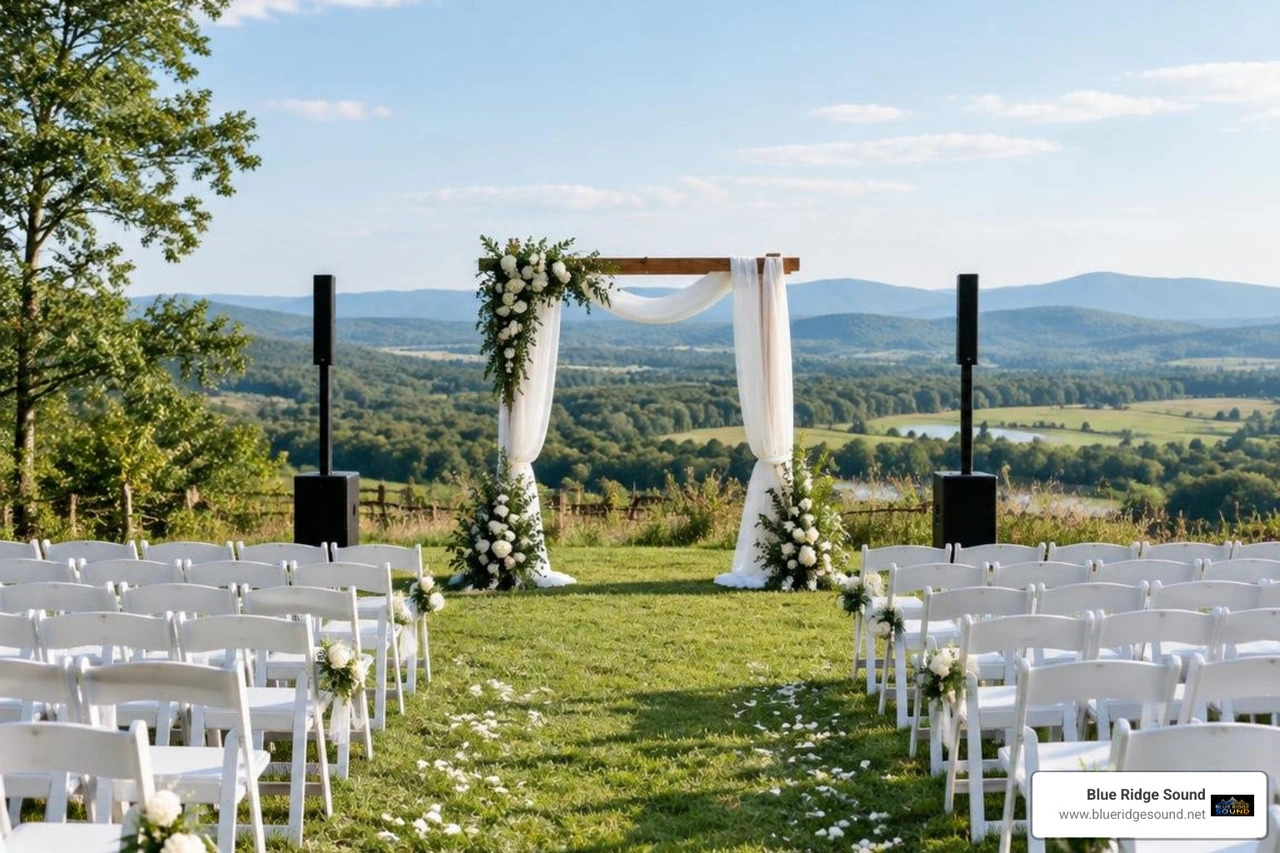
Acoustic feedback develops whenever amplified output from a loudspeaker re-enters a live microphone capsule, creating a self-reinforcing audio squeal. Preventing feedback requires strict physical separation between loudspeakers and live microphones across the ceremony layout.
Main loudspeakers—such as slim column line arrays—must be placed several feet downfield from the altar, pointing directly toward guest seating. Keeping cardioid and supercardioid capsules positioned in the null zone behind speaker enclosures maximizes your gain-before-feedback margin. Technical standards in professional audio, including the Shure guide on live sound reinforcement, emphasize keeping sensitive microphone elements outside loudspeaker coverage patterns.
Indoor historic chapels and modern estate halls feature hard flooring, brick walls, and tall glass windows that generate persistent reverberation. In these spaces, directional microphones and moderate output volume minimize muddy reflections. Open-air settings across Waynesboro, Staunton, and Scottsville lack reverberant surfaces but introduce wind resistance, thermal air currents, and ambient distractions. You can learn how to prepare for open-air environments in our outdoor wedding microphone guide.
What Does Professional Audio Integration and Gain Staging Involve?
Integrating ceremony microphones into a clean sound reinforcement system requires disciplined gain staging at the mixing console. The preamp gain must provide sufficient headroom without inducing clipping, audible noise, or digital distortion. Corrective high-pass filtering cuts sub-bass rumble at low frequencies, removing handling thumps and wind disturbances, while targeted parametric equalization attenuates sharp vocal resonances before they initiate acoustic ringing, adhering to established Audio Engineering Society sound reinforcement standards.
Antenna placement is equally vital for uninterrupted signal transmission. Wireless receiver antennas require an unobstructed visual line of sight to bodypacks and handheld transmitters at the altar, free from structural pillars, dense masonry, or metal trusses.
Power management requires reliable, premium-grade lithium batteries in every transmitter to eliminate mid-ceremony dropouts. Dedicated mixer channels handle processional and recessional music tracks independently from spoken-word channels, allowing the sound engineer to execute seamless fades beneath vows and pronouncements.
What Does a Professional Pre-Ceremony Sound Check Cover?

A professional audio sound check takes place well before guests arrive on-site. The sound engineer evaluates signal levels, EQ clarity, and wireless reception from multiple seating zones across the venue. Before formal testing begins, the team confirms where the officiant, couple, readers, musicians, and any ceremony host will stand. That walk-through helps match microphone and speaker placement to the real ceremony layout rather than a generic floor plan. It also identifies practical concerns, including wind exposure, guest pathways, limited power access, and sightlines that could affect equipment placement or cable routing. During this review, the engineer listens for changes that occur when people move through the space, doors open, or the ceremony party gathers near the altar. The goal is to make simple adjustments before guests arrive, such as repositioning a speaker, securing a cable, changing a microphone's placement, or selecting a better location for the mixing position. For outdoor ceremonies, the team also confirms that windscreens, speaker bases, and cable paths suit the conditions at that time of day. A calm, organized check keeps the ceremony team focused on the moment while the audio system is ready for the people speaking. It gives the sound crew time to resolve small details without making the wedding party wait during the final moments before the ceremony.
Our team executes a methodical testing procedure before every event, which you can review in our wedding ceremony sound checklist:
- RF Spectrum Scan: Conduct a real-time local frequency scan across the UHF spectrum to identify and assign clean, intermodulation-free transmission channels.
- Gain and EQ Calibration: Dial in preamp trims, high-pass filters, and frequency cuts tailored specifically to the voices of the officiant, couple, and readers.
- Seating Walk-Test: Walk the entire listening area—including back rows and perimeter seating—to confirm balanced coverage, clarity, and comfortable volume.
- Cable and Line Management: Dress and tape down all exposed power runs and signal lines across aisles using professional gaffer tape to prevent safety hazards.
- Backup Gear Staging: Stage a charged, pre-tuned spare wireless handheld mic, fresh batteries, and emergency audio cables at the mixing console.
Frequently Asked Questions About Ceremony Microphones
Should the Couple Have Their Own Microphones for Vows?
For larger guest counts, dedicated vow amplification helps ensure spoken promises are heard clearly throughout the audience. In quiet indoor sanctuaries, a sensitive, expertly positioned lavalier on the officiant or groom can often pick up both partners cleanly. In outdoor or windy settings, passing a dedicated wireless handheld microphone directly between the couple helps provide clear, confident vocal capture without room noise.
How Do Sound Teams Reduce Feedback During Outdoor Vows?
Sound engineers reduce feedback by placing column array speakers forward of the altar, selecting directional cardioid capsules, and applying corrective equalization on the mixing console. Attenuating sensitive resonant frequencies provides the engineer with generous headroom, allowing speech volume to be raised smoothly while reducing the risk of hollow room ringing or runaway squeals.
Is a Wired Microphone a Useful Backup for Wedding Toasts?
Yes. While wireless handheld microphones provide complete mobility for wedding party toasts across the reception room, keeping a wired dynamic microphone plugged in and sound-checked at the console provides a dependable safeguard. If unexpected radio frequency interference or sudden battery exhaustion occurs during formal toasts, a wired microphone provides an immediate, reliable connection.
Blue Ridge Sound provides complete wedding ceremony sound, reception DJ/MC support, and full-service event audio production throughout Charlottesville, Albemarle County, and Central Virginia. We handle the technical design, equipment delivery, on-site live sound engineering, and teardown so your day unfolds smoothly. Call us at (434) 872-1893 or get a quote for ceremony sound services to start planning your event audio.