

Barn Dance Lighting That Feels Warm and Works Safely
Barn dance lighting should make the room feel warm and welcoming while keeping the dance floor, entrances, and walkways safe to navigate. Start with three layers: warm string lights for the room, soft uplighting to show off the timber, and even, glare-free light over the dance floor. Keep entrances, steps, and exit routes clearly lit. If the barn has no power, plan battery-powered fixtures and coordinate any other power needs with the venue before choosing the setup.
The goal is a dance floor that draws people in without leaving the rest of the barn hard to navigate. Flowers, barrels, and seating can catch a little light, but they should never hide fixtures or crowd a walkway. For couples and planners in Charlottesville, Albemarle County, and the Shenandoah Valley, this often means working with historic post-and-beam barns that were never designed for modern event lighting.
I'm Drew Edmondson, owner of Blue Ridge Sound in Charlottesville, where I plan event sound and lighting for celebrations across Central Virginia. My approach to barn dance lighting is to make the room feel welcoming while keeping power, guest movement, and the dance floor in view. That starts with a layered plan: ambient glow for the room, focused light for the dance floor, and clear illumination for every path guests will use.

How Do You Design Barn Dance Lighting for Rustic and Unpowered Venues?
Designing lighting for a historic timber barn in Albemarle County or the Shenandoah Valley requires working with the space rather than fighting it. Historic post-and-beam structures feature high ceilings, aged timber, and open spans that absorb light rapidly. Applying event lighting design fundamentals helps you balance ambient room brightness, dance floor focus, and architectural accents.
Layering Ambient and Accent Barn Dance Lighting
A balanced layout relies on multiple lighting layers working together:
- Ambient Overhead Glow: Festoon strings and warm Edison bulbs draped across structural tie beams provide comfortable general illumination.
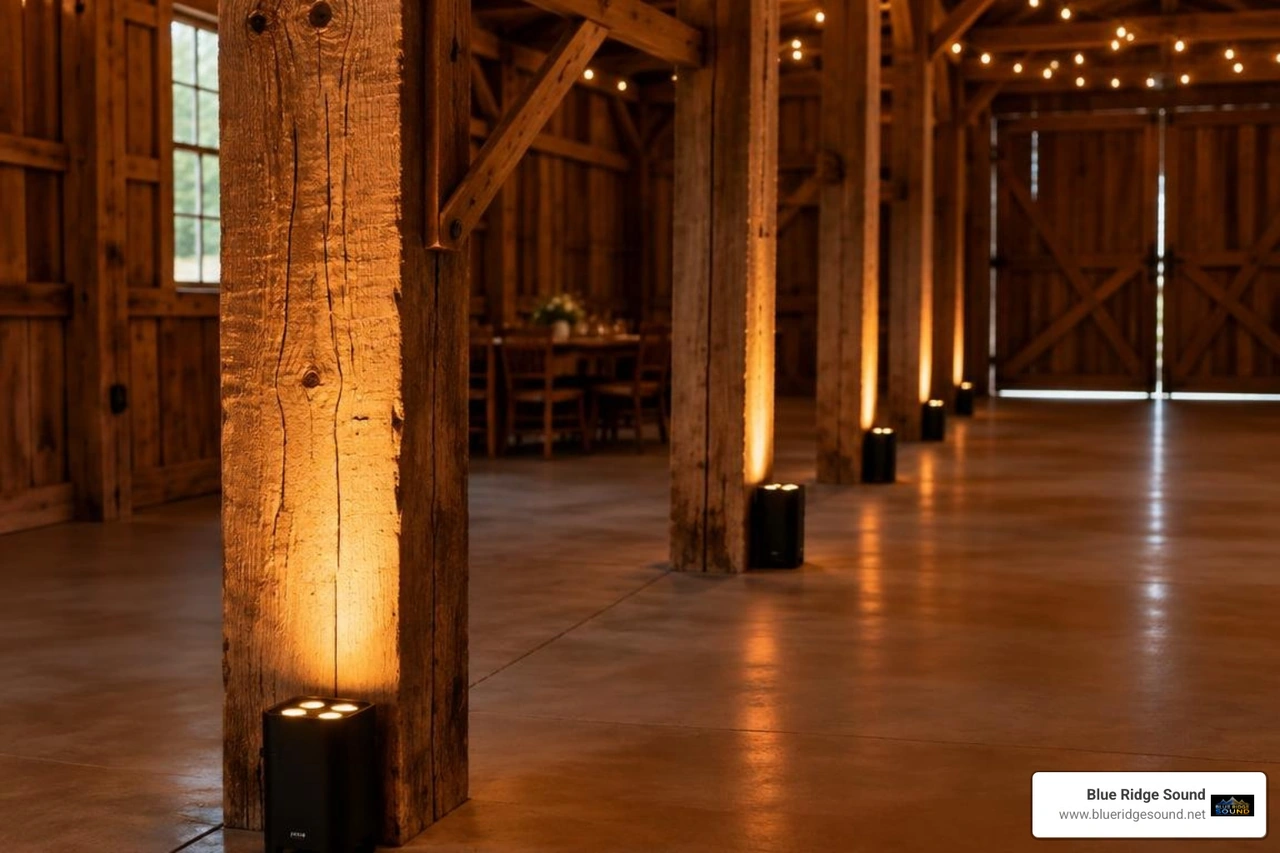
- Architectural Uplighting: Slim LED fixtures placed at the base of primary timber posts wash vertical beams with warm amber tones.
- Perimeter Accent Lights: Subtle fairy lights wrapped along railings or loft edges add depth without creating glare.
Warm white illumination (2700K to 3000K) complements natural wood grains and creates an inviting environment for guests socializing between dance sets. The Illuminating Engineering Society publishes recommended illuminance levels for assembly spaces, which can serve as a useful reference when planning ambient light in a barn.
Illuminating Post-and-Beam Rafters and Architectural Details
Aged wood absorbs light differently depending on its finish and species:
- Raw Oak: Darker oak beams reflect very little ambient light, requiring dedicated narrow-beam uplighting to reveal rafter joinery.
- Whitewashed Pine: Lighter, weathered pine surfaces reflect more light, softly diffusing illumination across the ceiling.
- Corrugated Metal Accents: Metal roofing sections reflect directional beams, making fixture angle adjustments essential to prevent unwanted reflections.
Uplighting structural posts draws the eye upward, highlighting the height and craftsmanship of historic timber framing. When selecting fixtures, I look for LED units with high color rendering index ratings so the timber reads naturally rather than washed out.
How Can You Transform the Dance Floor into the Main Focal Point?
The dance floor is the heartbeat of any barn celebration. Defining this space visually encourages guests to transition smoothly from dinner and conversation to high-energy dancing. Professional dance floor lighting establishes clear visual boundaries while maintaining balanced brightness across the floor.
| Fixture Type | Best Application | Visual Impact | Power Demand |
|---|---|---|---|
| LED PAR Fixtures | Overhead wash on truss or crossbeams | Even, tunable wash with rich color control | Very low (battery or standard AC) |
| Pendant Chandeliers | Centerpiece over dance floor midpoint | Elegant focal point and ambient glow | Low to moderate |
| Festoon Strings | Overhead canopy grids | Warm, classic festival atmosphere | Low (LED filament bulbs) |
| Textured Gobos | Projected patterns on floor or barn walls | Dynamic visual depth and rustic breakup | Low (LED profile spots) |
Dynamic Fixtures and Dance Floor Illumination
To achieve even coverage across the dancing zone without blinding guests or callers, mount adjustable LED wash fixtures at approximately 45-degree down-angles. Using fixtures with high color rendering indexes (CRI >90) ensures skin tones look natural while keeping the floor clearly visible. Adding subtle break-up gobos that mimic leafy branches or timber grain adds visual texture across wide wooden floorboards. If you're planning both dancing and a live band or DJ setup, our team can coordinate event lighting and uplighting alongside your sound system for a cohesive look.
Integrating Rustic Decor with Modern LED Fixtures
Modern event fixtures blend cleanly with traditional barn decor elements:
- Straw Bale Seating: Tuck battery-powered, cool-running LED pucks behind straw seating lines to cast a gentle floor wash along lounge areas.
- Wine and Whiskey Barrels: Place small amber accents behind rustic barrels to backlight floral arrangements.
- Mason Jar Displays: Line entryway tables with low-voltage fairy lights inside vintage glass jars for authentic country charm.
Because modern LED fixtures generate virtually no heat, they can be safely positioned near wooden barrels and dry floral accents. The U.S. Department of Energy notes that LED lighting produces significantly less heat than traditional incandescent sources, which matters in timber structures where fixture placement near wood and dried decor is common.
What Are the Power and Safety Considerations for Historic Barns?
Rustic agricultural structures were rarely built with modern electrical distribution in mind. Evaluating available power early prevents overloaded circuits and tripping breakers during key moments of your event.
Planning Lighting for Venues Without Electrical Service
When hosting events in unpowered barns or open-air pavilions across Central Virginia, battery-powered systems eliminate the clutter and hazards of long extension cords. Utilizing wireless DMX uplighting allows complete control over colors, dimming, and scenes without running signal cables across walkways.
When supplemental generator power is required for sound and larger lighting rigs, coordinate with the venue to position generators downwind and away from guest areas. Proper load distribution across dedicated circuits protects sensitive audio and lighting hardware. The Occupational Safety and Health Administration provides guidance on portable generator safety, including placement and ventilation requirements that apply directly to barn events.
Egress Path Illumination and Fire Safety Considerations
Safety is paramount in timber structures. The National Fire Protection Association (NFPA) 101 Life Safety Code outlines illumination standards for means of egress in assembly spaces. Key safety practices include:
- Exit Routes: Ensure all primary exits, doors, and transitional walkways maintain continuous, glare-free pathway illumination.
- Step and Threshold Visibility: Position low-profile markers near elevation changes, ramps, and barn door thresholds to prevent trips.
- Fixture Placement: Keep all electrical cords taped down or covered with rubber cable ramps outside traffic lanes.
For venues in Albemarle County, checking local fire marshal requirements during planning helps avoid last-minute changes. The Albemarle County Fire Rescue office can clarify inspection and occupancy expectations for assembly events in agricultural buildings.
How Can Lighting Support Event Flow and Photography?
Proper lighting design guides how guests move through the venue while supporting your photographer and videographer throughout the night.

Guiding Guest Movement Across Indoor and Outdoor Zones
Barn celebrations frequently flow between indoor dance floors, outdoor fire pits, and covered porches. Marking transitional pathways with low-voltage landscape fixtures or warm festoon lines helps guests navigate safely between zones. Keeping outdoor fixtures focused downward minimizes light trespass into surrounding rural properties.
Coordinating Event Lighting with Photography
Photographers working in rustic barns face dynamic movement in low-light conditions. Implementing camera-ready event lighting with flicker-free LED drivers and consistent color temperatures helps cameras capture crisp motion during fast line dances and square dances without harsh shadows or color banding.
Bringing Your Rustic Lighting Vision Together
Creating an unforgettable barn dance comes down to thoughtful planning, reliable equipment, and respecting the character of the venue. By layering warm ambient strings, focused dance floor washes, and architectural accents, you turn a rustic barn into an inviting celebration space where guests feel comfortable dancing all night long.
At Blue Ridge Sound, we deliver comprehensive sound design, wedding DJ services, and professional event lighting tailored to historic venues and rustic properties across Central Virginia. We handle everything from power distribution planning to full setup and teardown so you can focus entirely on enjoying your celebration.
Frequently Asked Questions About Rustic Event Illumination
How should dance floor brightness be balanced in a barn?
Dance floor lighting should provide clear visual focus without overpowering the warm ambient glow of the surrounding room. Angling fixtures from perimeter posts or overhead crossbeams at downward angles delivers even coverage while preventing glare in dancers' eyes.
How do you plan lighting in a barn with no electrical service?
Unpowered venues rely on rechargeable, battery-powered LED fixtures with extended runtimes. For larger layouts, quiet inverter generators placed away from the barn supply safe, stable power for overhead string canopies and audio systems.
What color temperature works best with weathered barn wood?
Warm white color temperatures between 2700K and 3000K enhance the natural warmth of oak, pine, and cedar timbers. Cooler white tones can make aged wood appear gray and flat.
Planning a barn dance or rural celebration in Charlottesville, Albemarle County, or the Shenandoah Valley? Request a custom quote from Blue Ridge Sound to start designing your event sound and lighting package today.