Charlottesville Memorial Service Sound

Memorial service sound-system rental in Charlottesville—planned for clear words, meaningful music, and an unobtrusive setup.

Coordinate tributes, readings, music, microphone handoffs, room coverage, venue systems, accessibility handoffs, testing, and live operation through one calm audio plan.

1-business-day responseClear next steps, without pressureVenue-specific planningCoverage, power, access, and timingCentral Virginia serviceCharlottesville and surrounding communities
Service planning

Choose the complete event solution—not one disconnected item.

A memorial or celebration-of-life program may move between an officiant or host, family tributes, readings, recorded music, live performers, quiet reflection, and closing directions. The sound plan should follow that sequence without making equipment the focus of the gathering. Blue Ridge Sound scopes loudspeakers, microphones, playback, coverage, testing, staffing, and backup decisions around the confirmed program and occupied space. Projection, displays, livestreaming, recording, captioning, interpretation, assistive listening, staging, and lighting are included only when they are specifically confirmed in the written proposal.

Common uses

  • Celebrations of life, memorials, and remembrance gatherings
  • Programs with family tributes, readings, or an officiant
  • Recorded music, live acoustic contributions, and quiet reflection
  • Indoor rooms, covered spaces, and outdoor gathering areas
  • Venues with an installed system that needs a defined audio handoff
  • Programs needing delivery, setup, rehearsal, or an audio technician
Scope options

What can be included.

The final proposal confirms exact equipment, quantities, labor, delivery, operation, and teardown. Nothing is assumed from a generic package name.

  • PA loudspeakers placed for the confirmed audience and speaking area
  • Wired or wireless handheld, wearable, and lectern microphone options
  • Mixer channels, local music playback, and program-cue coordination
  • Microphone handoff, mute, and backup planning
  • Coverage listening checks from representative seating positions
  • Cable, power, access, and discreet equipment-footprint planning
  • Setup and testing, with staffed operation when appropriate
  • A written proposal defining equipment, labor, responsibilities, timing, and price

Begin with the family’s program and priorities

Start with the sequence and the people responsible for it. Identify the host or officiant, readers, family speakers, musicians, recorded selections, moments of silence, processional or recessional music, audience participation, and closing announcements. Note where each person will stand, whether anyone will move, which parts are fixed, and who can approve a schedule or technical change. That information is more useful than choosing a speaker package before the program is understood.

Ask the family or authorized organizer how visible the equipment should be and whether any part of the gathering has cultural, religious, privacy, or recording boundaries. Blue Ridge Sound can plan an unobtrusive audio footprint around confirmed instructions, but it does not decide ceremony customs or who has authority to approve content. The sound and social-gatherings resource offers a useful framework for respecting context, participation, language, and intentional silence.

Turn the service outline into a calm run of show

Create a simple cue sheet with the correct name of every speaker, the order of readings and tributes, the exact audio file or live input for each music cue, the speaking position, and what follows. Add pronunciation notes, estimated durations, any pause before music begins, and the person who confirms that the next participant is ready. A clear document lets the operator prepare each channel or file without interrupting the family during the gathering.

Name one organizer, planner, officiant, funeral professional, or venue representative as the event-day decision contact. Family members may contribute files and program details, but the technical team needs one approved path for changes. Share the final cue sheet before setup, then hold a brief review with the speakers or responsible contact. The goal is not a theatrical rehearsal; it is to confirm names, positions, files, handoffs, and the opening and closing cues.

Match microphones to people and handoffs

A person reading at a lectern, a host moving between seats, several family members sharing tributes, and a musician do not use the same input. Speaking volume, mobility, hand use, clothing, number of simultaneous voices, room layout, and handoff time affect whether a wired handheld, wireless handheld, wearable, lectern, stand-mounted, or instrument input is practical. Final types and quantities depend on the confirmed program, system compatibility, venue rules, and available inventory.

Plan who gives, retrieves, and mutes each microphone. A shared handheld can simplify a short sequence when one person manages the handoff; a fixed position can make several readings more predictable. Give speakers a brief, respectful instruction on distance and position, then test representative voices before guests arrive. The speech microphone rental page explains the complete path from microphone to mixer, loudspeakers, coverage, and operation.

Confirm the venue system and outside-equipment rules

Ask the venue for a current inventory, available inputs, operating contact, sound limits, access window, loading route, power information, and any approval required for outside equipment. An installed system may be appropriate, may cover only part of the room, or may not accept the microphones, playback devices, or live inputs in the program. A wall plate or house microphone does not by itself confirm coverage, compatibility, or who is responsible for operation.

The written scope should identify which party supplies, tests, and operates every critical link: microphones, receivers, mixer inputs, loudspeakers, playback devices, cables, power, recording or stream feeds, and teardown. If the gathering uses a chapel, funeral home, community room, residence, outdoor site, or another venue type, the responsible organizer should confirm its policies directly. Blue Ridge Sound does not claim service at a venue simply because its public rules are used during planning.

Design clear coverage without dominating the room

Audience count is only one input. Room width and depth, ceiling and wall reflections, seating direction, background systems, outdoor wind, nearby activity, and permitted loudspeaker positions all affect intelligibility. Placement should support the occupied seats while preserving aisles, exits, accessible routes, sightlines, flowers, photographs, ceremonial objects, cameras, and staff movement. More volume from one position is not always the best answer for a wide or deep layout.

Representative speech should be checked at the front, middle, sides, rear, and any overflow area. A separate coverage zone may be more appropriate than turning the nearest loudspeaker up. The aim is understandable words and comfortable music across the planned listening area, not the loudest possible result. Blue Ridge Sound’s coverage and intelligibility resource explains direct sound, distance, reflections, distributed systems, and the limits of any design.

Prepare music, tribute media, and live inputs early

Collect final music and media files when possible. For each selection, identify the exact version, source device, operator, cue wording, start point, fade or stop instruction, and whether the audio is intended for the room only or also for another provider. Keep local copies of essential audio instead of relying only on a streaming account, internet connection, or last-minute phone handoff. Test the actual file and connection through the confirmed system.

A tribute video may need its audio routed from the presentation device to the sound system, but projection, display, switching, recording, livestreaming, internet, editing, and media permissions are separate responsibilities unless the proposal says otherwise. For live singers or musicians, provide the performers, voices, instruments, connections, stage or floor positions, monitor requests, and schedule early. A speech-focused PA does not automatically include a performance system or recording service.

Coordinate accessibility and backup paths

Clear room sound can help many listeners, but it does not replace every communication aid or service. The organizer should ask participants what support they need and engage the qualified provider responsible for assistive listening, captioning, interpretation, accessible programs, or other aids. The U.S. Department of Justice advises covered entities to consider the nature, length, complexity, and context of communication and the person’s usual method when deciding what is effective.

Document an alternative for the most important speaking and playback moments. That may include a wired microphone, a second confirmed playback device, spare batteries, printed remarks, or another venue-approved path. A backup should be connected or ready enough to use without creating a long interruption. No wireless or electronic system can be promised never to fail, so the proposal should define the tested primary path, reasonable backups, operating responsibility, and any excluded service.

Plan load-in, power, safety, and the schedule

Confirm when the room or site is available, when flowers, seating, catering, displays, or other elements will be placed, and when quiet testing can occur. Share stairs, elevators, parking, carrying distance, doorway limits, floor protection, power locations, circuit restrictions, weather exposure, and the teardown deadline. Equipment should not be set through an active guest path, and testing should be scheduled with respect for the family and venue operations.

Protect cables, preserve exits and accessible routes, and keep equipment in approved positions. Outdoor gatherings need a documented weather process and protected electrical connections, with the organizer and venue retaining authority over delay, relocation, shelter, evacuation, and cancellation. Blue Ridge Sound can scope audio power and weather precautions for its confirmed equipment; it does not replace the venue’s safety plan or the responsible power provider.

Request a proposal with the useful details

Provide the date, venue and room or outdoor area, estimated attendance, seating layout, program outline, speaker count, speaking positions, music and media files, live performers, installed-system details, accessibility interfaces, power, access, testing window, public start and end times, teardown deadline, venue requirements, and authorized contact. Photos or a floor plan can make coverage, cable routes, and equipment visibility easier to discuss.

Blue Ridge Sound can consider delivered rental, setup and testing, or technician-operated audio based on the confirmed program and availability. The proposal states the equipment, labor, schedule, responsibilities, and price so the organizer knows what is included. Nothing on this page promises a date, inventory, a specific outcome, or a service not listed in that proposal. Share the gathering details for a quote.

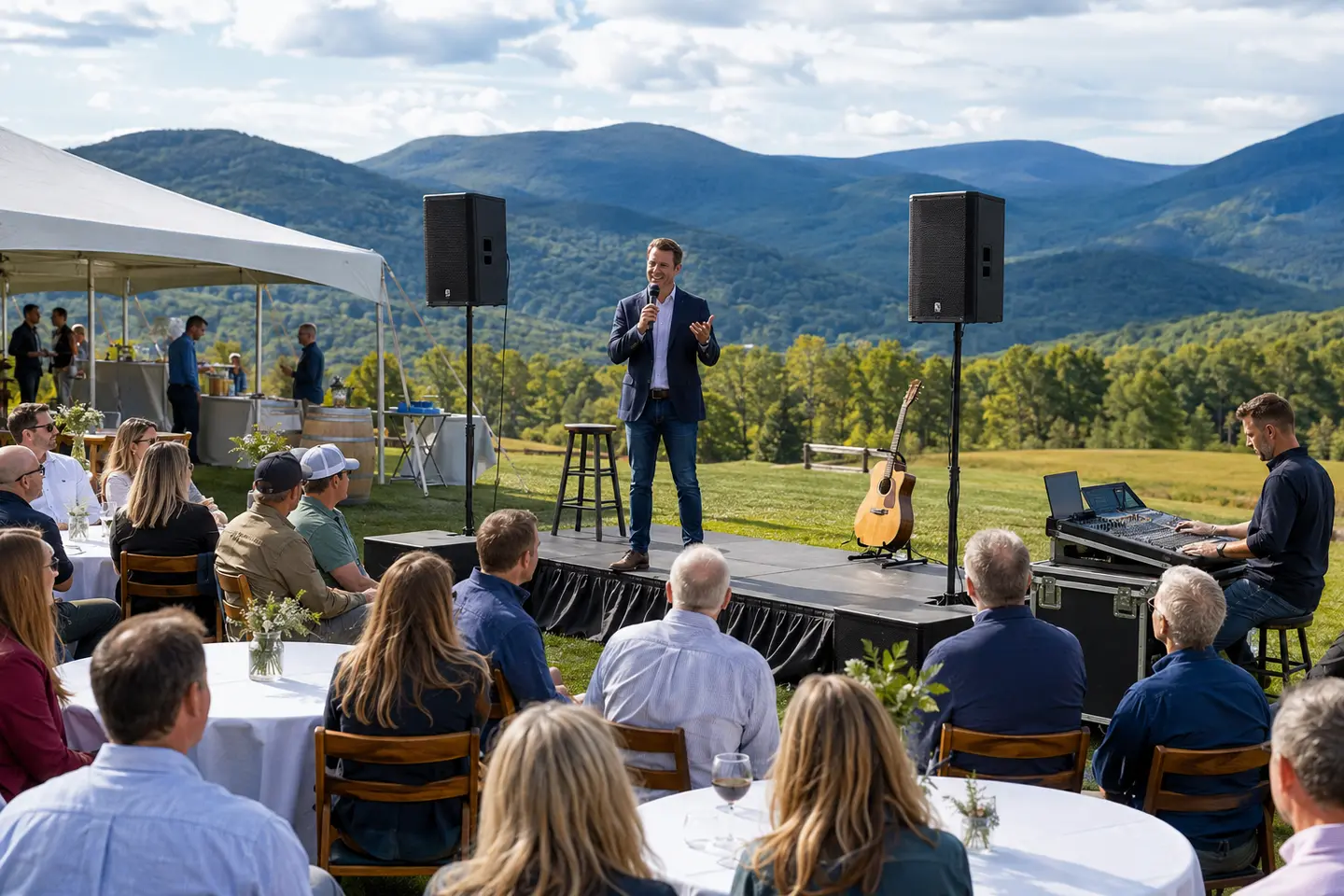
Professional PA loudspeakers and a wireless microphone arranged for a Central Virginia outdoor gathering
Respectful memorial audio

Clear words and meaningful music, with a calm technical plan.

Tributes, readings, music, room coverage, accessibility handoffs, venue systems, and backups are coordinated without making equipment the focus.

Plan your event →
Planning FAQ

Answers before event day.

What sound system is needed for a memorial service?

The useful system depends on the room or outdoor area, audience layout, speaking positions, recorded music, live performers, installed venue equipment, background noise, power, and who will operate it. Blue Ridge Sound reviews those details before recommending equipment.

How many microphones should a celebration of life have?

Count the host or officiant, fixed reading position, family tributes, live performers, audience participation, and a backup. Shared microphones can reduce channel count but require a planned handoff, so the final quantity depends on the program flow and confirmed inventory.

Can Blue Ridge Sound play music or audio from a tribute video?

Compatible local music and media-audio playback can be scoped and tested from the confirmed device. Projection, displays, video switching, livestreaming, recording, internet, editing, and permissions are separate unless the written proposal specifically includes them.

Can the sound system support an outdoor memorial?

An outdoor gathering can be considered when the audience area, power, protected equipment positions, weather plan, property rules, sound limits, access, and organizer or venue decision maker are confirmed. The organizer retains responsibility for weather and safety decisions.

Does Blue Ridge Sound provide livestreaming or recording for memorial services?

Livestreaming and recording are not assumed with sound-system rental. Ask during scoping so any available audio feed, provider handoff, permissions, equipment, internet responsibility, labor, and exclusions can be stated in writing.

Does a memorial service need an on-site audio technician?

A short program may suit delivery, setup, testing, and operation by a qualified venue or organizer contact. Multiple speakers, live music, media cues, separate areas, venue-system integration, or tight transitions often benefit from staffed audio. The proposal confirms the selected service mode.

How much does memorial service sound-system rental cost in Charlottesville?

Pricing depends on the venue, audience area, microphones, music and media inputs, delivery, access, setup, testing, staffed operation, event duration, travel, and teardown. Blue Ridge Sound provides the price and included responsibilities after reviewing the gathering details.

Get the right system on the first trip.

Send the venue and event details. Blue Ridge Sound will recommend a practical rental or staffed production scope.

Start your quote →