Charlottesville Sports Event Audio

Sports event PA system rental in Charlottesville for clear announcements across the field.

Plan announcer microphones, music playback, audience coverage, activity zones, power, safe cable routes, weather decisions, and show-day operation around the actual site.

1-business-day responseClear next steps, without pressureVenue-specific planningCoverage, power, access, and timingCentral Virginia serviceCharlottesville and surrounding communities
Service planning

Choose the complete event solution—not one disconnected item.

A sports event may need one voice to reach bleachers, participants, volunteers, officials, registration, a finish line, and an awards area without making the loudest listeners uncomfortable. Open-air distance, wind, crowd noise, field geometry, separate activity zones, limited power, and frequent schedule changes make a generic two-speaker package a poor planning method. Blue Ridge Sound scopes the complete audio path and operating plan for the confirmed site and program.

Common uses

  • School and community athletic events
  • Road races, charity walks, and finish-line programs
  • Tournaments, field days, and multi-activity events
  • Opening remarks, safety notices, awards, and ceremonies
  • Background music, walk-up cues, and sponsor messages
  • Rental delivery and setup or technician-operated production
Scope options

What can be included.

The final proposal confirms exact equipment, quantities, labor, delivery, operation, and teardown. Nothing is assumed from a generic package name.

  • Main loudspeakers and distributed coverage sized to the audience map
  • Announcer, handheld, or wearable microphones as confirmed
  • Mixer inputs for microphones, local music, and approved external feeds
  • Separate speaker zones or delay coverage when the site supports them
  • Protected cabling, power planning, setup, testing, and teardown
  • Playback checks for opening, activity, awards, and closing cues
  • Weather-aware equipment placement and an approved alternate plan
  • On-site audio operation when included in the written proposal

Start with the event map—not a wattage number

Share the field, track, course, bleacher, registration, start, finish, staging, concession, and awards locations that matter to the program. Mark where people gather, where an announcer can see the action, which areas need intelligible speech, and where amplified audio must be limited. Audience depth and direction are usually more useful than total attendance alone.

A compact field with one listening area may use a simple main system. A long course, wide spectator area, or multiple simultaneous activities can require distributed loudspeakers, separate zones, or independent systems. Placement depends on the confirmed layout, available positions, property boundaries, venue rules, cable paths, and whether people or vehicles cross those paths.

Separate announcements, music, and program feeds

List every audio source: announcer microphone, event director, officials, emergency messaging, music playback, walk-up cues, recorded sponsor messages, scorekeeping audio, livestream, or a house system. Each source needs an identified connection, level, connector, owner, and test point. A device or feed is not included simply because it appears on the run of show.

A dedicated announcer microphone and tested backup may be practical when announcements are mission-critical. Music playback should come from a prepared local source with approved files and charging power, not depend on an untested personal phone or unstable connection. If scorekeeping, timing, streaming, or video vendors need an audio handoff, define that interface before load-in.

Design coverage for intelligibility before loudness

Turning one pair of speakers up is not the same as covering a large outdoor area. Listeners close to the system can receive too much level while distant areas still lose consonants and detail. Loudspeaker pattern, mounting height, aiming, distance, wind, terrain, bleachers, buildings, and background noise all affect what the audience hears.

Distributed or delayed coverage can reduce the level required from the main position, but it adds signal routing, timing, power, cabling, and control requirements. Blue Ridge Sound bases the recommendation on the site and communication goal. Final quantities and placement are confirmed only after the coverage area and safe equipment positions are understood.

Plan power, cable routes, and weather decisions together

Identify every available circuit, outlet location, generator, distribution point, and shared load. The venue or responsible power provider should confirm capacity and connection rules. Audio equipment, timing systems, concessions, inflatables, lighting, and other vendors should not be assumed to have compatible or sufficient power simply because an outlet is nearby.

Cable routes should avoid participants, officials, spectators, vehicles, wet areas, and emergency access. Outdoor equipment also needs practical protection from sun, wind, moisture, and sudden weather. NOAA recommends a lightning-safety plan before an outdoor event begins. The organizer and venue retain authority for weather monitoring, shelter, delay, evacuation, relocation, and cancellation decisions.

Coordinate accessibility and safer listening with the organizer

Important announcements may need to reach people who use different communication methods. The organizer should determine applicable accessibility obligations and requested accommodations early. ADA guidance explains that effective communication can involve auxiliary aids and services, including assistive listening, captioning, interpretation, or accessible written information depending on the event and audience.

Music level, duration, audience distance, and recovery time also belong in the event plan. The World Health Organization provides a safe-listening standard for venues and events. Blue Ridge Sound can plan the confirmed sound system and operating approach, while the organizer, venue, officials, and responsible authorities set event policy, legal requirements, emergency communication, and accommodation decisions.

Rehearse the handoffs that control the day

Build a concise audio run of show covering opening music, team or participant introductions, scheduled announcements, competition cues, breaks, award presentations, sponsor messages, closing remarks, and any emergency-message handoff. Name one authorized program lead who can approve changes and one person responsible for each external feed.

Allow time to line-check every source, walk the listening areas, confirm microphone technique, test playback, verify communication with officials, and practice the backup microphone or source. Send the event date, site map, audience areas, schedule, microphone positions, audio sources, power information, access window, sound restrictions, weather alternative, staffing needs, and teardown deadline for a responsible proposal.

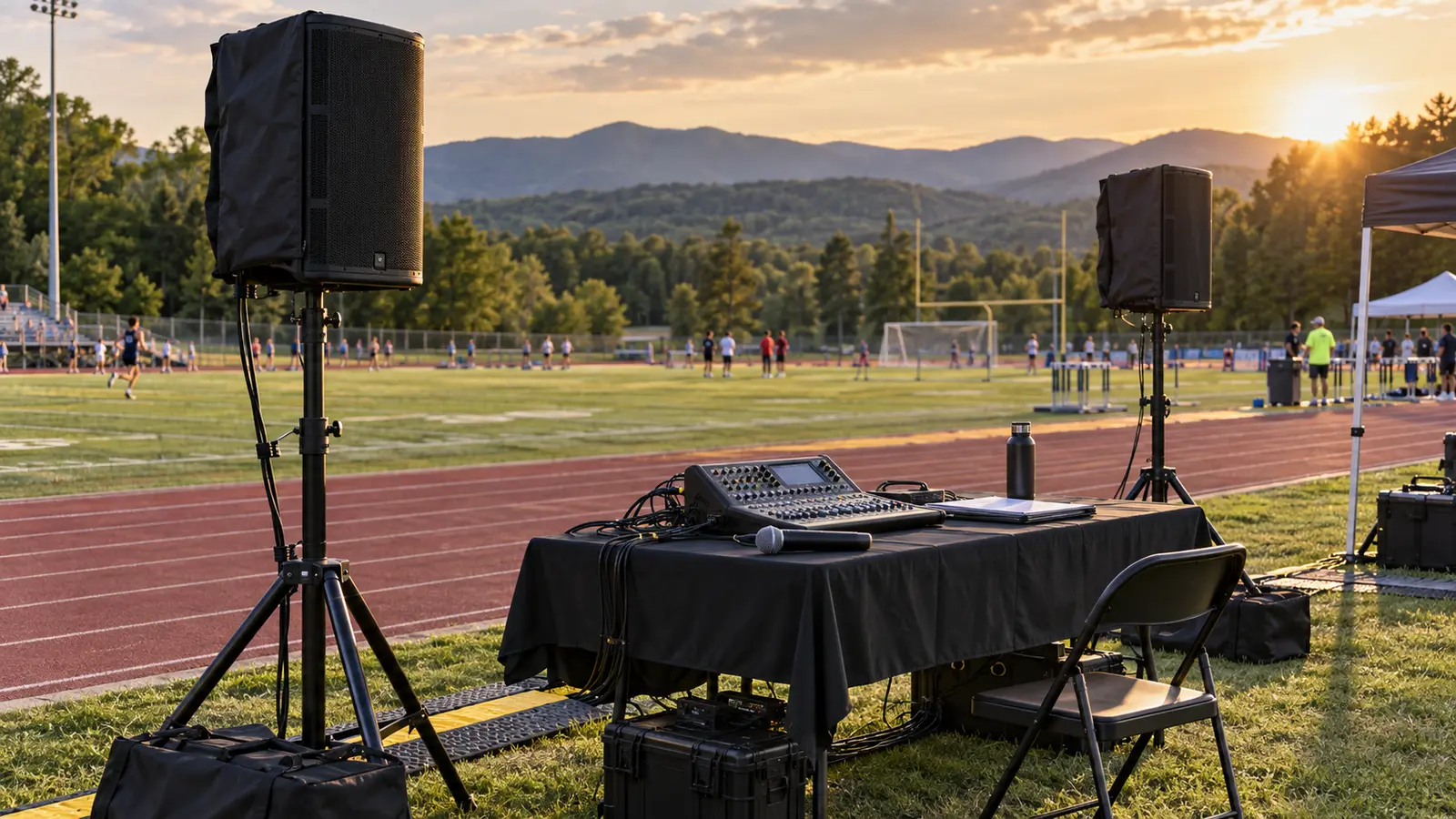
Professional loudspeakers, digital mixer, and wireless announcer microphone beside a Central Virginia outdoor sports field
Field-ready event audio

Announcements, music, and coverage built around the site.

Field geometry, bleachers, participant routes, power, weather, and activity zones shape a sports-event PA plan that goes beyond a generic speaker count.

Plan your event →
Planning FAQ

Answers before event day.

What size PA system is needed for an outdoor sports event?

The coverage map, audience depth, activity zones, terrain, background noise, speech and music needs, loudspeaker positions, power, and operating plan determine the system. Attendance alone is not enough to choose equipment responsibly.

How many speakers are needed around a field or track?

There is no fixed number. A compact spectator area may use a main pair, while a long, wide, or multi-zone site may need distributed coverage. Placement, aiming, timing, power, and safe cable routes must be planned together.

Can the announcer use a wireless microphone while music plays?

Yes, when the microphone, receiver, mixer, playback source, loudspeakers, frequency plan, and operator workflow are scoped as one system. The proposal confirms the exact microphone style, backup, inputs, and staffing.

Can one PA system cover the start line, finish line, field, and awards area?

Sometimes, but separated zones can require additional loudspeakers, delay alignment, independent level control, signal distribution, power, or separate systems. A site map and schedule are needed before that can be confirmed.

Can event audio connect to timing, scorekeeping, livestream, or video systems?

An audio input or output can be planned when the other provider supplies the connection, signal level, connector, location, isolation, and testing requirements. The handoff is included only when it is documented in the written scope.

What should the weather plan include for an outdoor sports PA system?

Confirm decision authority, weather monitoring, shelter and evacuation procedures, protected equipment positions, cable and power changes, an alternate location or schedule, and enough time to relocate and retest. The organizer and venue control all safety decisions.

Can Blue Ridge Sound deliver, set up, and operate the sports-event PA?

Delivery, setup, system testing, live operation, teardown, and self-serve rental options can be considered. The written proposal confirms equipment, labor, responsibilities, timing, availability, and price for the actual event.

Get the right system on the first trip.

Send the venue and event details. Blue Ridge Sound will recommend a practical rental or staffed production scope.

Start your quote →