How to Choose Event Sound Rental for Your Venue
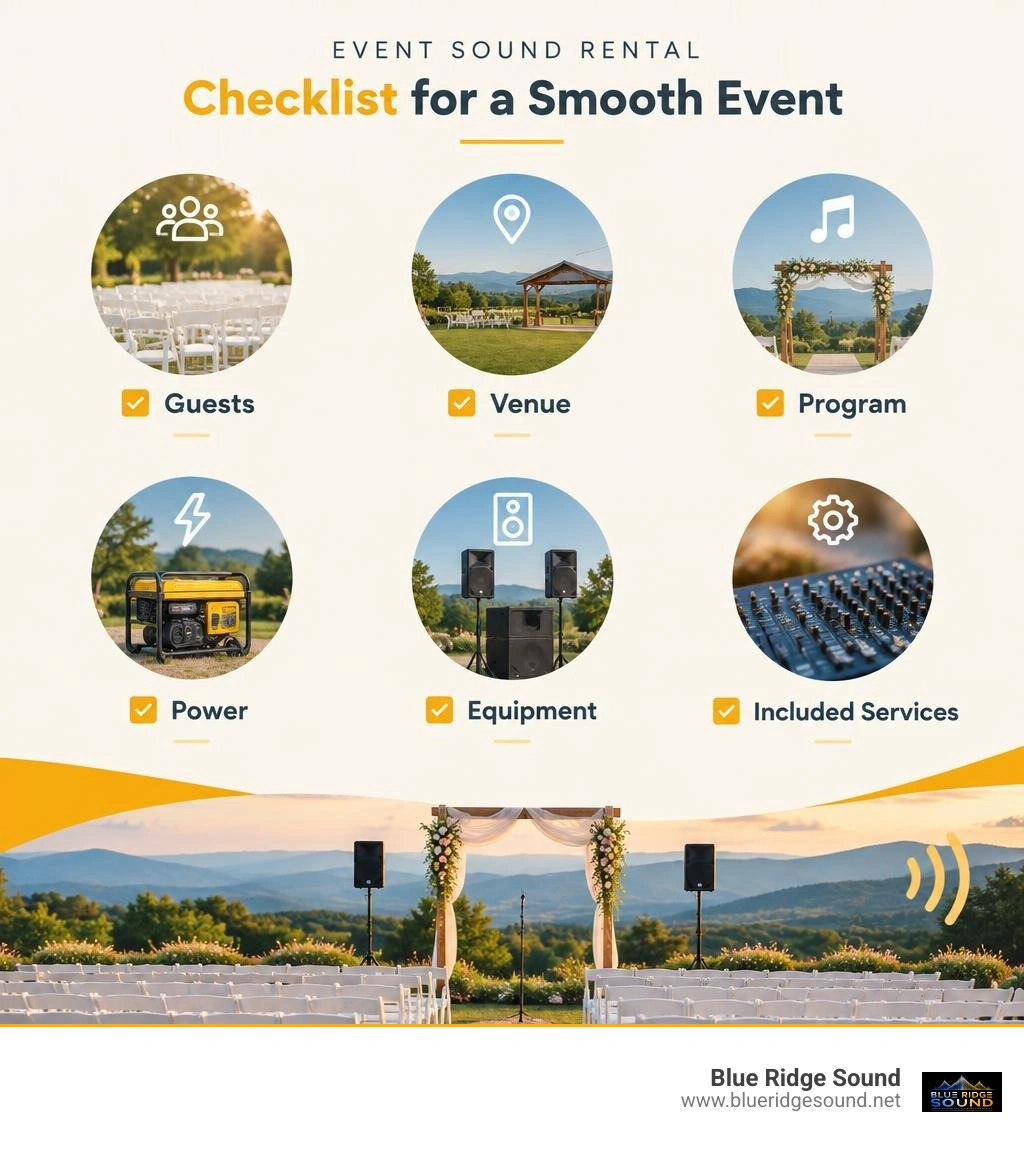
To choose the right event sound rental for your venue, match your sound equipment directly to your guest count, physical room layout, and specific programming needs. Evaluate complete production service packages that include acoustic site design, full setup, dedicated sound checks, and on-site engineering rather than comparing dry gear lists.
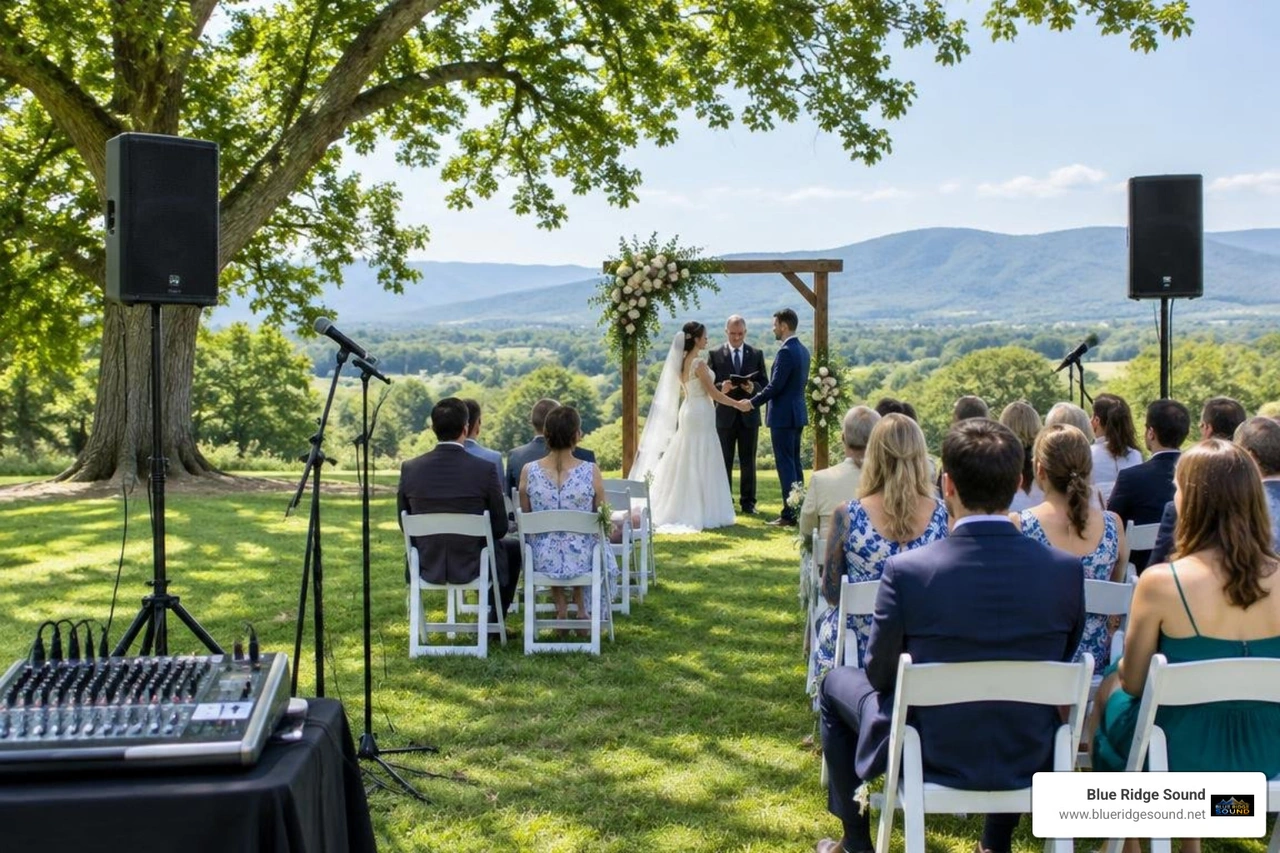
When organizing an outdoor wedding ceremony, vineyard reception, or corporate presentation across Central Virginia, you must also evaluate how sound coverage handles open lawns, breezy ridges, or historic architectural spaces. Ensuring uninterrupted clarity requires planning for speaker coverage angles, clean microphone delivery, and independent off-grid electrical supply when venue wall outlets are far away.
I'm Drew Edmondson, owner of Blue Ridge Sound in Charlottesville. My hands-on event sound rental experience comes from providing customized wedding DJ, MC, and professional event sound services across Central Virginia. We build tailored audio systems sized specifically to each venue so every spoken word and musical note sounds clear.
What Should You Look for in an Event Sound Rental Package?
When searching for audio equipment, focusing strictly on raw amplifier wattage numbers or speaker model codes can feel overwhelming. What matters most for a stress-free event is securing a dependable, comprehensive audio production solution. Simply receiving a drop-off box of raw audio hardware leaves your team scrambling to lay heavy cables, balance microphone preamps, and troubleshoot sudden electrical ground loops or piercing audio hums during important moments.
A complete sound rental package includes comprehensive professional production support: tailored sound design, prompt delivery, careful equipment placement, pre-event sound checks, active engineering, and prompt teardown services when your reception wraps up. Having an experienced live audio technician on-site guarantees seamless transitions between subtle background dinner tracks, emotional toasts, panel discussions, and packed dance floors without sudden volume drops, dead air, or harsh feedback.
| Event Type | Typical Needs | Recommended Setup | Key Service Inclusions |
|---|---|---|---|
| Outdoor Wedding Ceremony | High vocal clarity, discreet visual footprint | Battery-powered column arrays, wireless lavalier & handheld mics | Onsite tech, pre-ceremony sound check, remote power management |
| Corporate Presentation / Panel | Even room coverage, zero feedback on speeches | Point-source powered speakers, auto-mixing digital console, podium mics | Setup, live microphone mixing, Q&A handheld coordination |
| Wedding Reception / Private Party | Full-range dynamic music, punchy bass, clear toasts | Pro-grade mains, dedicated subwoofers, wireless mics, dance floor lighting | Complete delivery, sound engineering, DJ/MC integration, teardown |
To explore our full-service options featuring professional Bose and JBL audio systems, take a look at our transparent sound and lighting packages.
Why Full-Service Production Outperforms Venue-Provided Audio
Many event facilities offer built-in ceiling speakers or simple auxiliary wall inputs designed primarily for low-level background dinner music. While convenient for casual conversation, these systems falter during dynamic keynote presentations, emotional wedding toasts, or live music performances. In-house ceiling speakers disperse acoustic energy downward from high structural rafters, bouncing sound off hardwood floors or stone walls and muddling speech intelligibility.
Professional live audio engineering resolves this challenge by placing precision loudspeakers at ear level and directing audio waves straight toward your audience. A dedicated live sound technician actively supervises audio gain staging, digital equalizers, and real-time room resonance at the mixing console. Practicing proper gain structure and feedback control stops high-frequency howling before it starts, ensuring every toast or presentation is intelligible across the room.
Active Powered Speakers Versus Passive Audio Systems
Modern live sound operations rely on active powered loudspeakers. Unlike older passive sound systems that require bulky amplifier racks and complicated speaker wiring runs, powered speakers house custom amplifiers and digital signal processing (DSP) inside each cabinet.
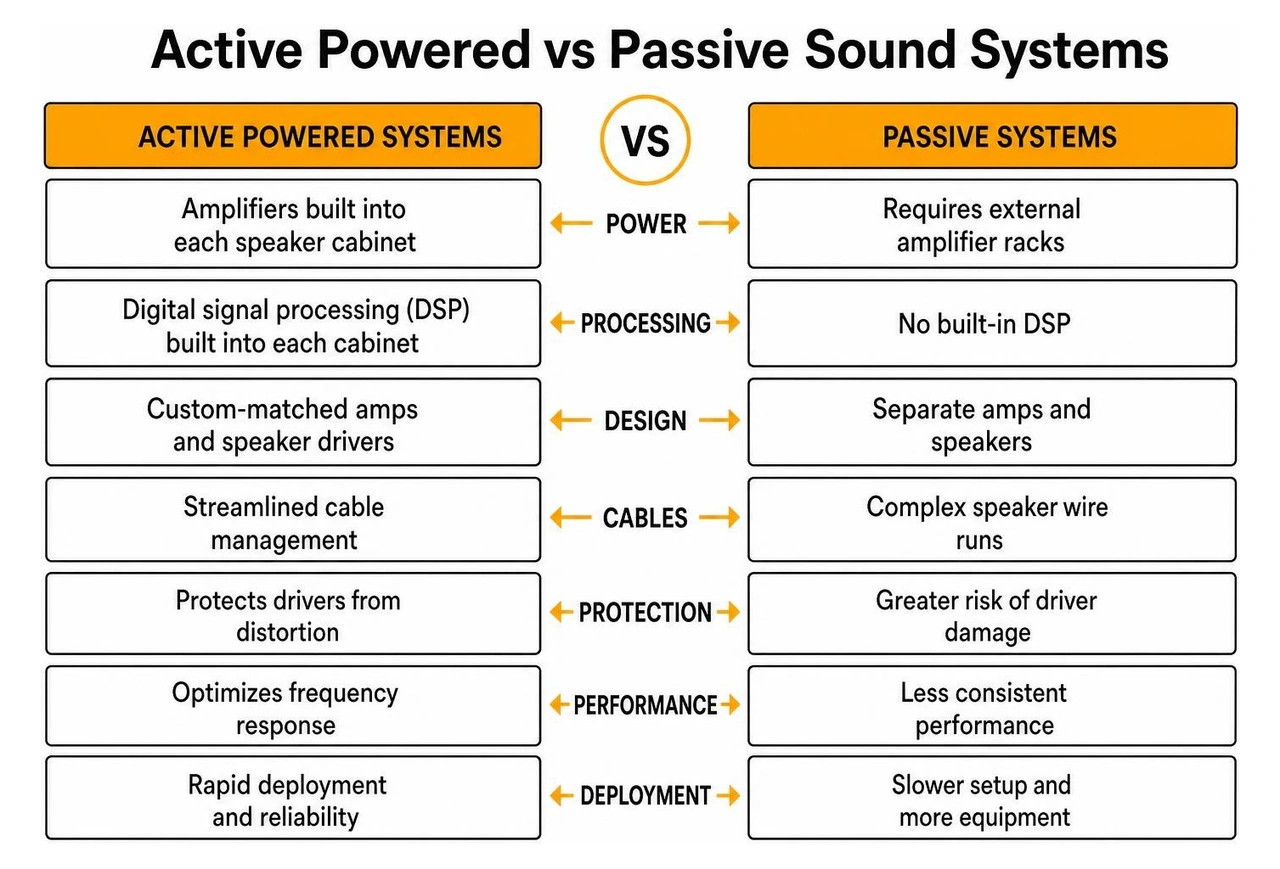
Integrated internal processing protects individual speaker drivers from accidental overload distortion, optimizes overall frequency response curves, and streamlines physical cable routing across your venue floor. For outdoor weddings across Albemarle County or corporate events throughout downtown Charlottesville, active powered systems provide rapid deployment, clean aesthetics, and unmatched audio dependability.
How Do Venue Acoustics and Guest Count Determine Speaker Sizing?
Every event space possesses unique acoustic characteristics. A historic brick building in Staunton or an industrial downtown warehouse reflects acoustic energy off exposed surfaces, generating long reverberation times and muddy room flutter that make speech hard to decipher. Conversely, an open ceremony lawn at a Nelson County vineyard lacks enclosing walls to contain sound waves, causing acoustic energy to dissipate into the open atmosphere.
Guest attendance also alters room dynamics and speaker requirements. Seated guests naturally absorb high-frequency sound energy, meaning a venue during morning setup sounds brighter and noticeably louder than the same space filled with two hundred guests. Properly sizing your audio system requires calculating physical throw distance from the front stage to the rear seats, positioning supplementary delay speakers in long rooms rather than excessively pushing two loud speakers from the front.
Sizing Point Source and Line Array Gear for Event Sound Rental
For intimate gatherings, wedding ceremonies, and mid-sized receptions up to several hundred attendees, portable column arrays and point-source powered speakers deliver wide horizontal sound coverage with tightly controlled vertical directivity. This precise acoustic dispersion pattern focuses acoustic energy directly toward guest ears rather than letting sound bounce off reflective ceilings.
For large-scale community festivals, multi-speaker outdoor concerts, or corporate presentations spread across broad outdoor lawns, modular line array speaker systems allow audio engineers to distribute balanced sound pressure evenly across extensive listening zones, as detailed in the JBL Professional Loudspeaker Coverage Guidelines.
Managing Low Frequencies with Subwoofers
Full-range primary speakers accurately reproduce vocal frequencies, speech intelligibility, and mid-to-high instrumental ranges, but dynamic low-end bass requires dedicated subwoofers. Adding subwoofers offloads heavy low-frequency demands from your main speakers, allowing mid-range drivers to deliver pristine, effortless vocal reproduction. Carefully positioning subwoofers along room boundaries or in coupled center clusters ensures your dance floor enjoys impactful, punchy bass without overwhelming seated guests conversing at nearby dinner tables.
What Microphone and Wireless Systems Are Best for Speeches and Live Performers?

Selecting the right microphones prevents dropouts and audio distortion during crucial event moments. Handheld dynamic microphones are ideal for passing between multiple speakers during wedding toasts or panel discussions because their durable capsules handle varied vocal levels smoothly. For wedding officiants and corporate keynote speakers who require hands-free mobility, discreet wireless lavalier or headset microphones position the capsule close to the speaker's mouth to maintain consistent volume.
Navigating Wireless Frequencies and Interference
Professional wireless microphone systems transmit audio over dedicated radio frequency spectrums. Delivering reliable wireless audio requires proactive frequency coordination and RF spectrum scanning to steer clear of interference from television broadcasts, cellular towers, and crowded venue Wi-Fi networks. Operating wireless gear safely and legally involves selecting certified UHF and digital bands in compliance with the FCC Wireless Microphone Guidelines and Spectrum Rules.
Dynamic Versus Condenser Microphones for Live Events
Dynamic microphones feature robust diaphragms that handle high sound pressure levels while naturally rejecting unwanted ambient noise, making them dependable choices for outdoor events, live vocalists, and roving toasts. Condenser microphones deliver heightened sensitivity and transient detail, capturing acoustic ensembles or podium speeches in controlled indoor settings, as explained in the Shure Microphone Selection Guide for Live Speech.
How Do You Handle Power and Audio at Remote Outdoor Venues?
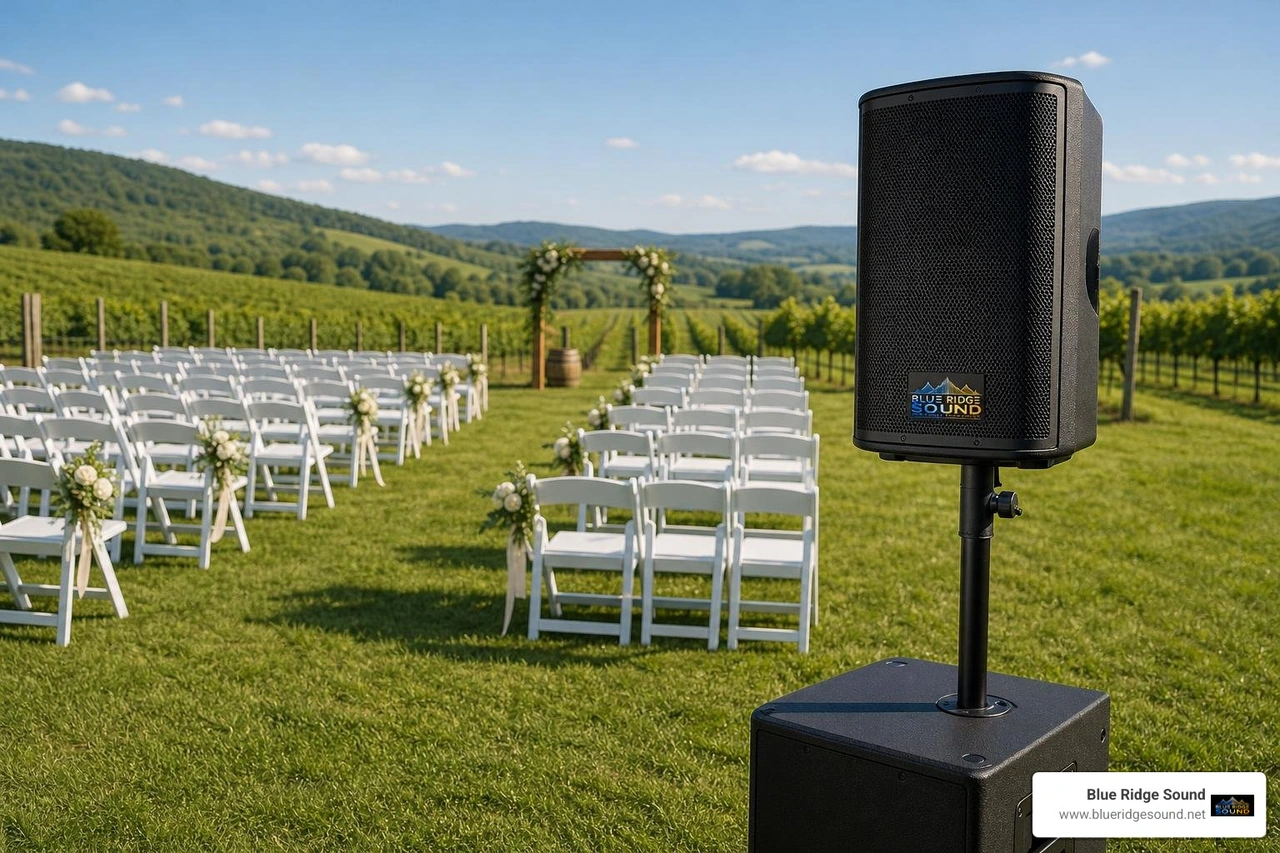
Many picturesque vineyard knolls, rustic farm barns, and scenic mountain ceremony overlooks across Central Virginia lack standard electrical outlets near the focal presentation area. Running hundreds of feet of standard extension cords introduces severe voltage drops, unsightly guest tripping hazards, and disruptive electrical hums into your audio path.
To support off-grid locations, we utilize professional battery-powered sound systems that deliver pristine, whisper-quiet, reliable audio performance for hours without loud generator rumble or messy cabling. If you are organizing an outdoor celebration in an off-grid location, review our helpful guide on planning sound for no-power venues to coordinate your logistical needs well in advance.
Protecting Hearing and Managing Sound Pressure Levels
High-energy receptions and dance floors thrive on exciting bass, but guest auditory safety and comfort remain our top priorities. We actively monitor sound pressure levels using calibrated decibel meters throughout every celebration, keeping music energizing while adhering to the CDC NIOSH Noise Exposure Standards and local noise ordinances across Albemarle County and surrounding Central Virginia townships.
Frequently Asked Questions About Event Sound Rental
How far in advance should I book sound equipment for an event?
Peak wedding and private event dates across Central Virginia—especially throughout May, June, September, and October—regularly reserve six to twelve months in advance. Securing your date early helps secure equipment availability, allows adequate time for venue walkthroughs, and supports dedicated audio technician scheduling for your celebration.
Can you provide sound for a venue without electrical outlets?
Yes, we provide dedicated battery-powered sound systems engineered for mountaintop ceremony sites, vineyard knolls, and remote rural venues where conventional grid power is unavailable, providing silent and reliable operation without noisy generators.
What audio equipment is included in a full-service sound rental package?
Our complete event sound rental packages feature professional Bose or JBL loudspeakers, dedicated subwoofers, wireless microphone systems, digital mixers, heavy-duty stands, all audio and electrical cabling, together with complete delivery, setup, live sound engineering, and teardown services.
Conclusion
Creating an unforgettable celebration begins with dependable audio production where every guest clearly hears every vow, speech, and song. At Blue Ridge Sound, we take the stress out of event audio across Charlottesville, Albemarle County, Crozet, Waynesboro, Staunton, Harrisonburg, Ruckersville, Scottsville, and the Shenandoah Valley with venue-tailored equipment and complete on-site management.
Ready to design an exceptional sound experience for your upcoming wedding or private gathering? Get a Quote today or call (434) 872-1893 to start planning your event audio.