
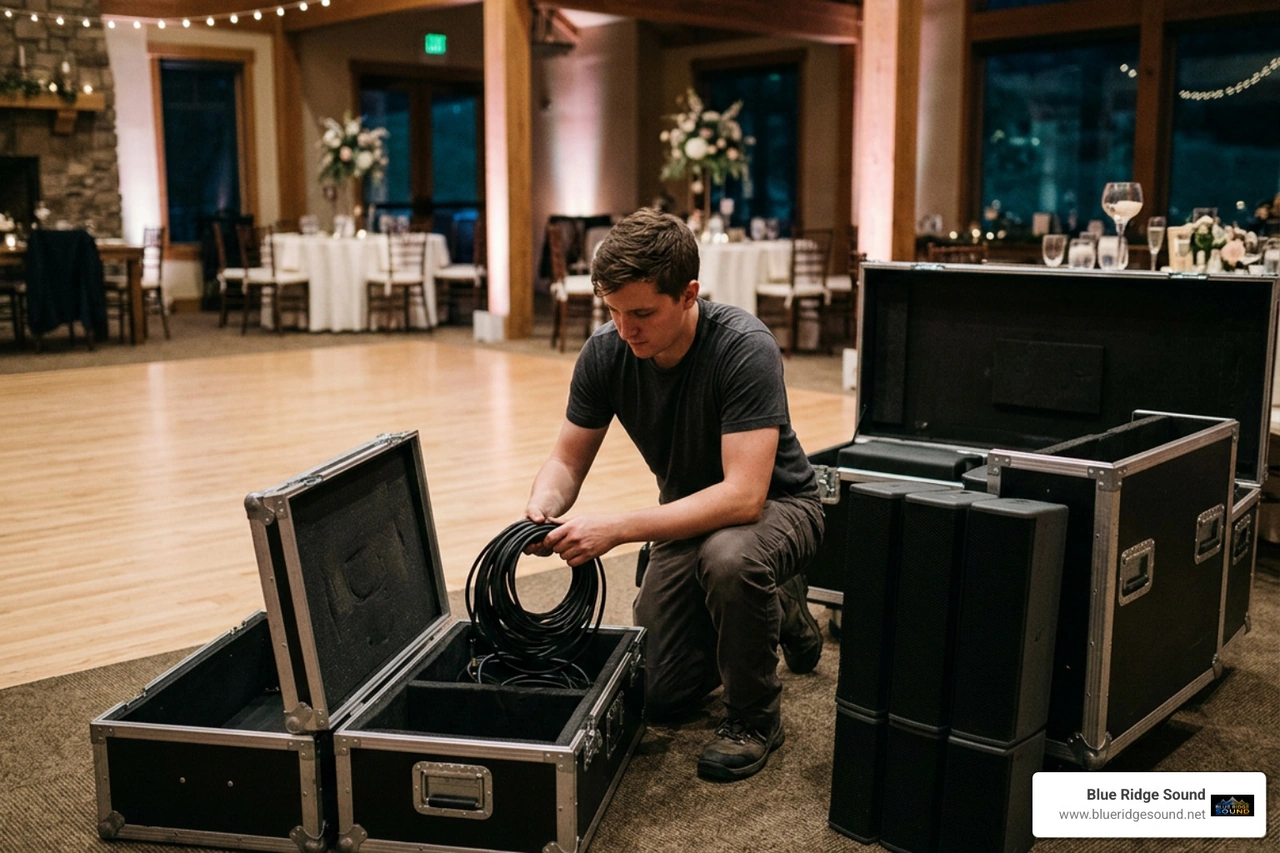
What Wedding DJ Breakdown Involves and How Long It Takes
Hiring a wedding DJ with teardown service means having a crew handle professional removal and packing of the sound equipment, lighting, and cables. A standard reception setup takes roughly 45 to 60 minutes to pack after the final dance; confirm the window with your DJ and venue so you can plan around curfews without ending the music early. Wedding sound and lighting equipment needs careful handling. The crew powers it down, checks that every item is accounted for, packs it safely, and coils the cables before checking the venue floor.
When our sound engineers pack down a reception space, the process involves dozens of individual pieces of hardware:
- Speakers: Disconnect and pack the main PA (public-address) speakers, including vertical column arrays, point-source speakers, and subwoofers—the speakers that handle bass—in protective transport cases.
- DJ equipment: Power down and pack digital mixers, performance controllers, laptops, audio interfaces that connect devices, and headphone monitoring equipment.
- Wireless microphones: Collect handheld microphones, wearable bodypack transmitters, and UHF/5.8 GHz equipment used to distribute wireless signals, checking that every item is packed.
- Audio cables and connection boxes: Remove XLR cable bundles and multi-channel stage boxes—the connection boxes that bring several audio lines together—from the dance floor and head-table areas.
- Lighting: Lower light stands, switch off moving-head dance floor lights, and collect wireless DMX equipment that sends and receives lighting-control commands, along with perimeter accent lights.
- Power and floor safety: Remove surge protectors, heavy-duty extension cords, cable ramps, and gaffer tape, then check the floor for trip hazards.
To help plan your venue’s equipment-removal window, here are typical timings for different event sizes and equipment selected through our wedding sound system rental options:
| Event Production Scale | Typical equipment | Onsite Crew Size | Average Teardown Duration | Ideal Load-Out Window Needed |
|---|---|---|---|---|
| Intimate / Single Room (Up to 75 guests) | 2 column speakers (vertical speaker arrays), 1 DJ controller, 2 wireless microphones, basic dance lighting | 1 DJ/Technician | 35 – 45 Minutes | 60 Minutes |
| Standard Reception (75 – 175 guests) | 2 powered main speakers, 1–2 subwoofers (bass speakers), DJ deck, 12 uplights, lights that cover the dance floor, wireless microphone equipment | 1 DJ + 1 Tech Assistant | 45 – 60 Minutes | 60 – 75 Minutes |
| Full-Day / Multi-Space (150 – 250+ guests) | Ceremony sound system, cocktail speaker, main-room speaker arrays, subwoofers (bass speakers), uplighting with coordinated digital controls, moving-head lights | 2 Production Technicians | 60 – 75 Minutes | 90 Minutes |
| Large Estate / Festival Rig (250+ guests) | Speaker arrays for multiple areas, time-aligned speakers for distant areas, groups of subwoofers, lighting and equipment support framework, microphones for combined live band/DJ setups | 2–3 Sound Engineers | 75 – 100 Minutes | 120 Minutes |
Equipment Breakdown Duration and Workflow
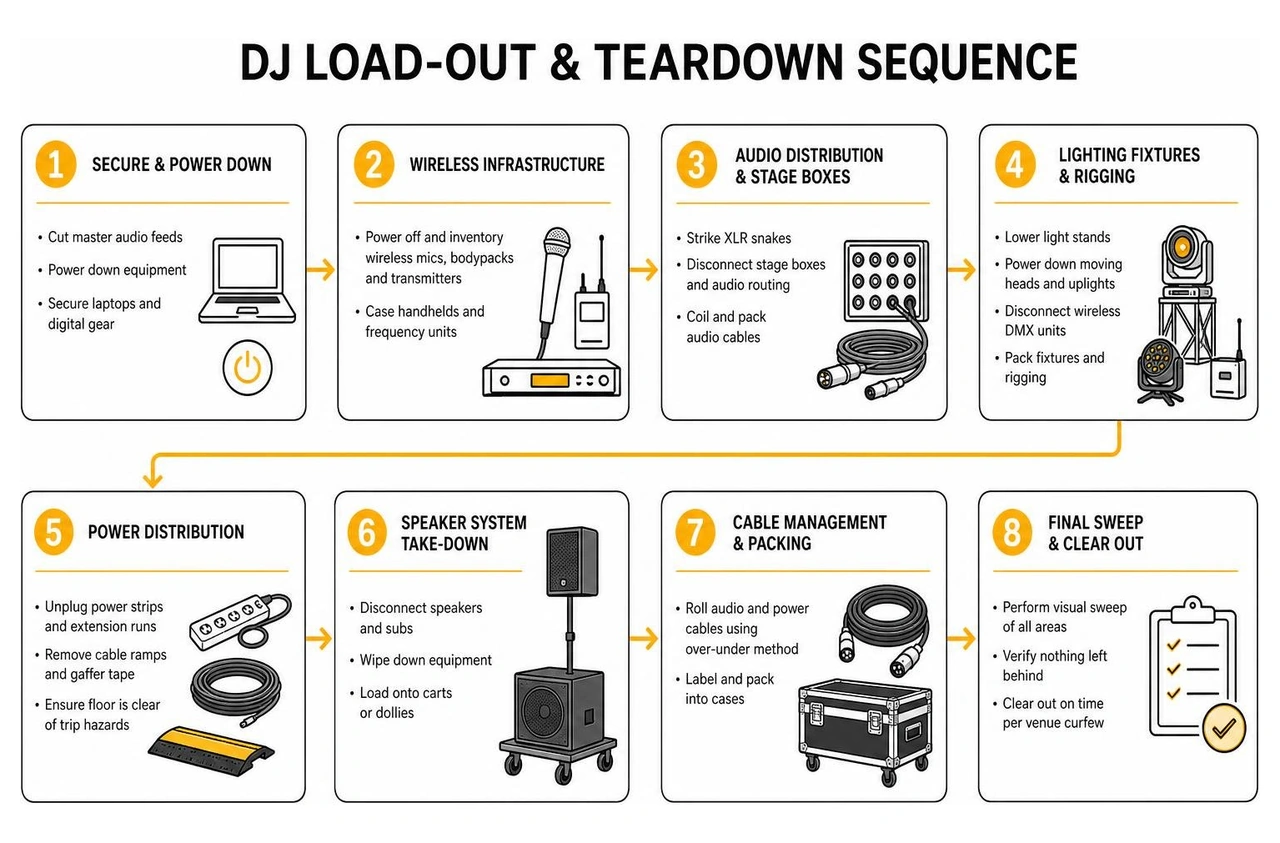
A standard wedding setup takes roughly 45 to 60 minutes to safely dismantle. The crew follows a planned packing sequence to work safely and efficiently.
First, the DJ switches off the main audio output and secures delicate digital equipment and laptops. Next, tall lighting fixtures and dance floor effects—such as fixtures from our dance floor lighting rental—are safely lowered from their T-shaped lighting supports, unplugged, cooled, and packed into padded transport cases. Heavy speaker columns and subwoofers are then disconnected and wiped down before being loaded onto rolling carts.
Finally, technicians roll up hundreds of feet of audio and power cables using the over/under cable coiling method (which prevents cable wear and signal failure for future events) and perform a visual sweep of the floor to ensure no personal property or venue fixtures were disturbed.
Managing the Last Dance and Send-Off Without Premature Packing
Packing visible equipment while guests are still dancing can make the reception feel finished too soon. Ask your DJ to keep the main sound and lighting in place through the agreed final song and confirm when packing will begin.
Your DJ should keep the music and party energy going through the final track. Equipment no longer needed—such as a cocktail-hour speaker in an empty foyer or empty transport tubs tucked out of sight—can be quietly moved behind the DJ’s decorative screen, ready for packing, during the final half-hour without drawing guest attention.
However, primary sound, main speakers, dance floor lighting, and emcee microphones stay 100% active until the final song concludes. Once the couple transitions outside for their grand exit, our team references our reception DJ MC announcements checklist to provide final instructions for shuttles and send-offs before tearing down the main audio rig.
Why Hiring a Wedding DJ with Teardown Service Is Critical for Your Venue Timeline
When you sign a contract with a wedding venue, the rental period almost always comes with a strict "hard out" curfew. If your venue contract states that all vendors and guests must vacate the premises by 11:30 PM, and your reception ends at 11:00 PM, you have precisely 30 minutes for your entire vendor team to clear the building.
Failing to book a professional service with a guaranteed teardown strategy can put your security deposit at risk. High-end venues frequently charge hefty penalty fees (often $250 to $500 per half-hour) if load-out runs late. When you partner with us for comprehensive wedding reception timeline coordination, we proactively calculate teardown windows during the initial planning phase, coordinating with your venue manager and wedding planner to prevent overtime fees.
Professional teardown coordination is especially vital when booking our complete wedding reception DJ services, ensuring that load-out routes, freight elevators, and loading docks are reserved and utilized smoothly alongside caterers and florists.
Navigating Strict Venue Curfews and Loading Docks
Historic estates, luxury boutique hotels, and downtown ballrooms frequently present unique logistical hurdles, including shared loading docks, narrow service elevators, tight parking spaces, and strict municipal sound ordinances.
In metropolitan areas, event venues may only permit one vendor at a time on the freight elevator. Without a shared loading plan, equipment removal can delay caterers, venue cleanup staff, and the rental team. Ask your DJ how they will plan vehicle placement, keep rolling carts ready, and coordinate with venue staff so equipment can move quickly and quietly while protecting floors and keeping exits clear.
Key Inclusions in a Professional Wedding DJ with Teardown Service Package
When comparing DJ quotes, check for support from setup through teardown, not just music during the reception. Confirm which of these services are included in your package:
- Setup and Sound Check Windows: Confirm arrival 1.5 to 2 hours before guests so the crew can check the sound without cutting into your contracted reception hours.
- Onsite Sound Technician Support: Ask whether dedicated support is included so the DJ can concentrate on emcee responsibilities while equipment is monitored during the event and safely packed afterward.
- Wireless Microphone and Transmitter Retrieval: Confirm collection and sanitization of microphones used during toasts and ceremonies, including hardware from wedding ceremony audio rentals.
- Lighting Removal and Cable Safety: Agree on removal of floor tape, safety cables, and electrical runs, with care taken to avoid marks on venue walls or floors.
- Post-Event Property Inspection: Arrange a final walkthrough with the venue coordinator to check the space and document its condition before you leave.
Teardown Logistics Across Indoor vs. Outdoor Wedding Venues
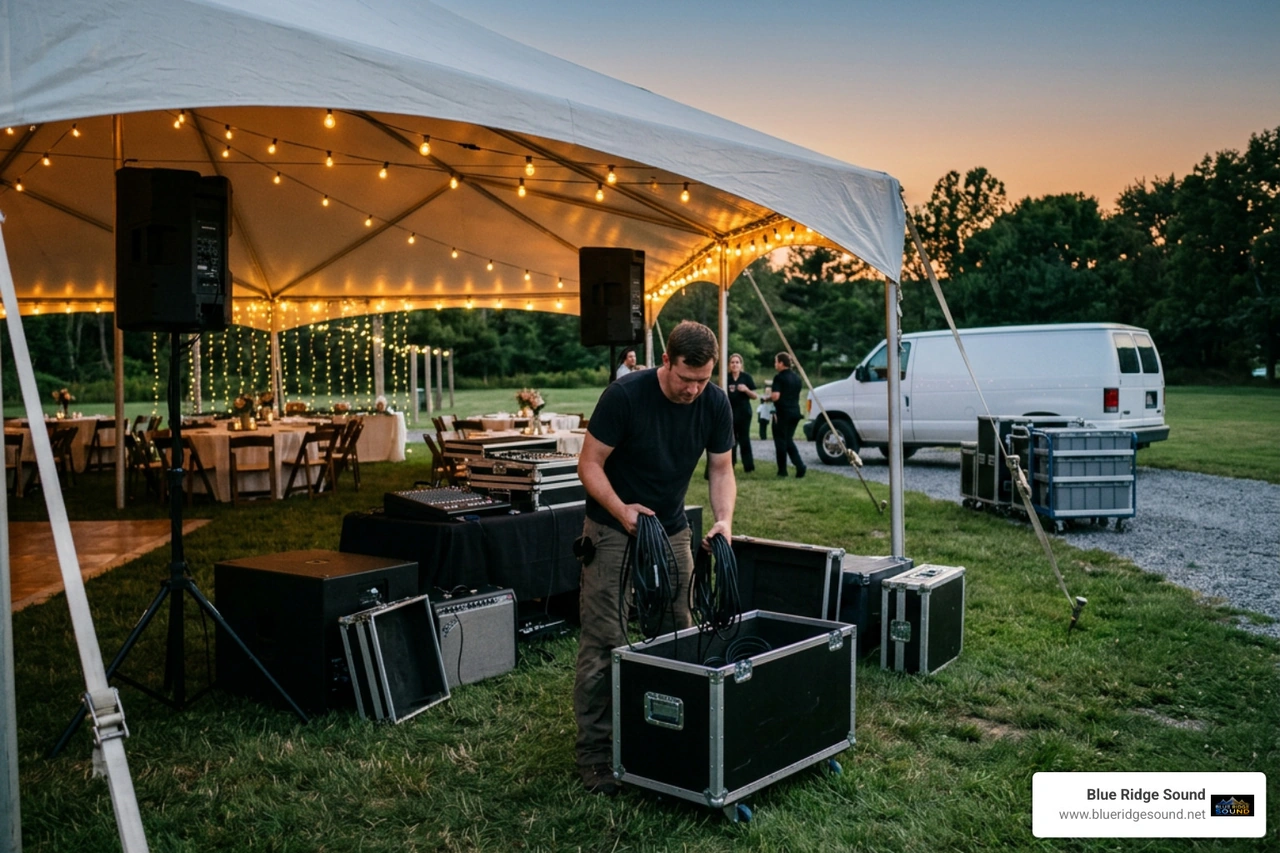
Logistics change dramatically depending on whether your celebration is hosted in a climate-controlled ballroom or out on a sprawling Virginia farm or vineyard. Outdoor celebrations—such as vineyard lawns, rustic barn estates, and marquee tents—introduce environmental variables that require specialized breakdown techniques.
When deploying our outdoor wedding sound systems, our technicians come prepared with headlamps, high-visibility pathway lighting, and turf-safe rolling carts. We ensure that our equipment wheels do not tear up delicate grass or get stuck in unpaved gravel paths while loading out in pitch-black conditions.
Weather Contingencies and Remote Power Breakdown
Outdoor venues frequently present rapid temperature drops, evening condensation, and sudden late-night rain showers. As nighttime falls, moisture and heavy dew settle on metallic stands, amplifier grilles, and electronic surfaces.
The crew checks for moisture and wipes down and dries hardware before placing it into protective transport cases to help prevent corrosion and electrical shorts. For remote rural venues, our no-power venue sound planning includes planning how equipment will be powered down. Technicians follow the appropriate generator shutdown sequence or safely disconnect high-capacity battery power banks to protect sensitive audio components.
Packing Sound Equipment and Collecting Uplights Across Multiple Spaces
Your wedding may use several spaces: an outdoor lawn for the ceremony, a covered patio for cocktails, and a hall or tent for dinner and dancing. Plan for the crew to pack equipment in each area once it is no longer needed.
With our multi-space wedding audio planning, we plan for the crew to pack the separate ceremony sound equipment just after the couple and wedding party walk back down the aisle, while guests enjoy cocktails. This avoids leaving that outdoor packing until late at night, when visibility is poor.
When packing decorative wedding uplighting, technicians use wireless DMX controllers, which send coordinated digital commands to the lights, to switch off the perimeter fixtures together. They pack the lights into cases that hold and charge several units, then check behind drapery and foliage for any remaining fixtures or wireless transmitters.
Pricing, Contracts, and Avoiding Common Teardown Mistakes
Understanding industry pricing models helps protect you from hidden post-event surcharges. Reputable DJ companies quote flat-rate or package-based fees that include full travel, setup, performance time, and teardown labor.
Some quotes list breakdown or late-night equipment removal as separate charges, so check those costs before comparing packages. When reviewing wedding DJ costs and packages, ask for clear pricing that spells out labor windows, overtime rates, and insurance coverage limits. For example, a policy might state $1 million per covered incident and $2 million total for covered claims during the policy period; check the actual coverage against your venue’s requirements.
Package Inclusions vs Hidden Breakdown Fees
When you receive a contract, check the breakdown of hours. A professional 5-hour reception agreement means 5 full hours of continuous musical performance and emcee services. Setup time (usually 90 to 120 minutes prior) and teardown time (45 to 60 minutes after) should be provided as standard operational inclusions at no extra cost.
Be cautious of contracts that bill teardown against your performance time, as this forces the music to stop 45 minutes before your venue rental expires.
Essential Questions to Ask Before Booking a Wedding DJ with Teardown Service
Before signing on the dotted line, ask your prospective entertainment company these crucial logistical questions:
- How much time do you require for equipment removal, and how many crew members will handle it? Compare that window with your venue’s deadline.
- Is teardown labor included in your written proposal, or billed as a separate fee? Confirm the cost before booking.
- What is your contingency plan if our reception runs 30 minutes over schedule? Ask about overtime rates and whether there will still be enough time to pack safely.
- Do you carry commercial liability insurance and provide certificates of insurance that meet our venue’s requirements? Check the required documentation with your venue coordinator.
- How do you handle teardown of separate sound equipment from the ceremony and cocktail hour? Confirm when each area will be packed and how equipment will be supervised until then.
Frequently Asked Questions About Wedding DJ Teardown
How long does a DJ take to tear down equipment after a reception?
For a standard single-room wedding reception with two speakers, a decorative screen around the DJ station, dance lighting, and microphones, allow roughly 45 to 60 minutes. Larger multi-space weddings with subwoofers, extensive room uplighting, and separate ceremony systems typically require 60 to 75 minutes with a two-person crew. Confirm the timing for your equipment and venue access before finalizing the schedule.
Is setup and teardown typically included in the wedding DJ price?
Many wedding DJ packages include equipment setup and removal alongside a specific window of active entertainment, such as 4, 5, or 6 hours of music and emcee services. Check your written quote and contract to confirm what is included, whether any separate charges apply, and that packing time will not reduce your agreed music hours.
What happens if the wedding reception runs past the scheduled end time?
If you want to extend the reception, the DJ will need to check the venue’s curfew and confirm any agreed hourly or half-hourly overtime rate. If the venue has a fixed deadline for everyone and all equipment to leave, the music must end with enough time for safe packing. Agree on that final-song time in advance so the crew can follow the equipment-removal plan without relying on a rushed teardown to avoid penalties.
Conclusion
Your wedding day should conclude with unforgettable memories of a packed dance floor, heartfelt farewells, and a seamless send-off—not the stress of watching the clock while vendors scramble to pack up gear. Choosing a dedicated, professional production team ensures your sound, lighting, and timeline are handled with precision from the first guest arrival to the final equipment case rolling out the door.
Blue Ridge Sound is a Charlottesville, VA-based event sound team serving Central Virginia, including Albemarle County, Crozet, Waynesboro, Staunton, Harrisonburg, Ruckersville, Scottsville, and the Shenandoah Valley. We provide professional JBL and Bose PA (public-address) systems with full setup-to-teardown service for wedding ceremonies, reception DJ/MC and sound, corporate events and AV (audio and video), live band support, event lighting and uplighting, and no-power solutions for barns, vineyards, and outdoor venues. Explore our professional wedding DJ services, then request a quote at blueridgesound.net or call (434) 872-1893 to discuss your venue and teardown timeline.