Charlottesville Lavalier Microphone Rental

Lavalier microphone rental in Charlottesville for clear, hands-free event speech.

Plan the wearable microphone, wireless path, placement, clothing, loudspeaker coverage, sound check, backup, and operator workflow as one complete system.

Check availability & get a quote →Compare packages
1-business-day responseClear next steps, without pressureVenue-specific planningCoverage, power, access, and timingCentral Virginia serviceCharlottesville and surrounding communities
Service planning

Choose the complete event solution—not one disconnected item.

A lavalier—also called a lapel or clip-on microphone—can give a presenter freedom to use notes, demonstrate an object, or move naturally. It is not automatically the best microphone for every speaker or event. Clothing noise, placement below the mouth, wind, nearby loudspeakers, wireless conditions, bodypack routing, battery management, and the rest of the PA system all affect the result. Blue Ridge Sound scopes the complete signal path for the confirmed venue and program, and treats lavalier availability as part of the written proposal rather than an assumed inventory promise.

Common uses

  • Presenters who need both hands free
  • Moderators, instructors, and interview-style programs
  • Wedding officiants, readers, and ceremony speakers
  • Panels or company programs with planned microphone changes
  • Indoor rooms and approved outdoor speaking positions
  • Delivered setup, sound check, or technician-operated audio
Scope options

What can be included.

The final proposal confirms exact equipment, quantities, labor, delivery, operation, and teardown. Nothing is assumed from a generic package name.

  • Compatible lavalier capsule, bodypack transmitter, and wireless receiver when confirmed
  • Mixer, loudspeaker, and signal-path integration
  • Placement and clothing check with the actual speaker
  • Wireless-frequency, receiver-position, and battery planning
  • Wind protection and movement testing when the event is outdoors
  • Backup microphone and handoff planning
  • Delivery, setup, representative listening checks, and teardown
  • On-site audio operation when included in the proposal

Choose a lavalier for the speaking job—not just for its small size

A lavalier microphone clips to clothing and lets the speaker keep both hands free. That can suit a presenter using notes, an officiant holding a book, an instructor demonstrating a process, or a moderator moving through a planned area. The tradeoff is distance: the microphone normally sits below and to the side of the mouth, so placement, clothing, head movement, speaking level, and room noise influence the sound more than the small appearance suggests.

Compare formats before reserving one. A handheld can place the microphone closer to the mouth and makes the active speaker visually obvious. A headset can keep a more consistent mouth-to-microphone distance for an energetic presenter. A lectern microphone can serve several people at one fixed position. A lavalier may be the practical choice when hands-free movement matters and the speaker, clothing, system, and operating plan support it. The wireless microphone rental page explains how the microphone, receiver, mixer, loudspeakers, and operator fit together.

Treat the microphone as one link in a complete PA system

A wireless lavalier does not send useful sound directly to a room by itself. The capsule connects to a bodypack transmitter; a compatible receiver supplies an audio output; a mixer accepts and controls that signal; and loudspeakers cover the planned audience area. Every connection, level, power source, frequency range, output type, and operator responsibility must be compatible. A camera, laptop, installed venue system, portable loudspeaker, and professional mixer may require different interfaces.

Tell Blue Ridge Sound what equipment the venue or another provider already plans to use. Share model numbers, input types, available mixer channels, loudspeaker locations, and the person authorized to operate the system. A receiver output or venue wall plate does not prove that two systems will work together. The written proposal identifies included equipment and handoffs. Recording, livestreaming, video, projection, internet, and editing are separate unless expressly confirmed.

Plan placement, clothing, movement, and consent with the speaker

Place and test the microphone with the actual speaker whenever possible. Jackets, lapels, dresses, scarves, necklaces, long hair, name badges, and loose fabric can rub or strike the capsule or cable. Head turns can change the voice reaching a chest-mounted microphone. The cable and bodypack also need a comfortable, discreet, secure route that does not restrict movement or damage clothing. Ask permission before attaching equipment or adjusting wardrobe.

DPA Microphones’ speech-intelligibility guidance explains that chest placement changes the captured voice spectrum and can reduce important consonant information if the microphone and system are not chosen and adjusted for that position. Blue Ridge Sound uses representative speech—not tapping the microphone—to evaluate placement, gain, tone, movement noise, and coverage. Hiding a microphone under clothing is not assumed; any concealed placement requires speaker approval, enough preparation time, compatible mounting materials, and a test for fabric noise.

Coordinate wireless frequencies and receiver position

Wireless microphones operate in shared radio spectrum. The Federal Communications Commission explains that permitted bands, power limits, licensing conditions, and coexistence with other services matter. Event planning should account for the exact venue, the system’s tuning range, the number of simultaneous channels, nearby wireless activity, receiver and antenna position, batteries, and a backup for the most important voice.

List every wireless device expected on site, including venue systems, bands, visiting production teams, broadcasters, security communications, and other presenters. Coordination should happen before guests arrive and be checked again in the room. Keep the receiver where the signal path and antennas can work as intended; do not assume a receiver hidden behind metal, inside a crowded rack, or far from the speaking area will behave like one placed and tested properly. No wireless plan can promise an interference-free environment.

Protect speech clarity and gain before feedback

The goal is understandable speech across the occupied audience area, not the highest possible volume. Loudspeaker aiming, distance, room reflections, background noise, open microphone count, equalization, microphone placement, and the presenter’s voice all affect clarity. A lavalier that moves in front of a loudspeaker or sits far below a quiet speaker may require more gain, which can reduce the margin before feedback.

Map the audience and test from the real speaking positions. Listen at the front, middle, sides, rear, and any overflow area while the presenter speaks at a normal level. Mute unused channels, keep microphones out of the direct loudspeaker path, and coach speakers on the movement boundaries established during rehearsal. Blue Ridge Sound’s gain structure and feedback resource and coverage and intelligibility guide describe the system-level decisions behind those checks.

Add outdoor wind, weather, and cable decisions

Outdoor use adds wind at the capsule, a wider audience area, changing background noise, longer distances, weather exposure, and sometimes limited power. A suitable windscreen can reduce wind disturbance, but it cannot make an exposed microphone immune to gusts. Clothing and cable movement should be tested in the presenter’s real range of motion, and the receiver, mixer, loudspeakers, and electrical connections need approved protected positions.

The organizer and venue remain responsible for weather monitoring, shelter, delay, relocation, evacuation, and cancellation decisions. Share the alternate location and decision time before the event so any equipment move can be evaluated and retested. If the venue has no dependable nearby power, review the no-power venue sound options. A weather alternative, generator, or additional coverage zone is included only when the proposal specifically lists it.

Rehearse speaker changes, batteries, and a practical backup

Build a short microphone run of show. Note who wears the lavalier, when it is fitted, who turns the bodypack on or off, where it is returned, whether another speaker needs the same system, and how much time exists between users. Different clothing and speaking levels can require a new placement and sound check. A rushed bodypack transfer during the program is not a substitute for a planned changeover.

For important remarks, identify a backup that can be used quickly. Depending on the event, that may be a wired or wireless handheld, a fixed lectern position, or another confirmed path through the PA. Keep fresh or charged batteries, approved replacement materials, and the operating contact available. A technician-operated scope can manage channel mutes, presenter changes, playback, and troubleshooting; a self-serve rental needs a qualified organizer or venue contact who accepts those responsibilities.

Coordinate accessible communication and outside audio handoffs

Clear amplified speech can support participation, but one lavalier microphone does not address every communication need. The organizer should ask attendees what support they need and arrange any required assistive listening, captioning, interpretation, accessible materials, or other qualified services. U.S. Department of Justice guidance emphasizes that effective communication depends on the nature, length, complexity, and context of the communication and the person’s usual method.

If a captioner, recording team, livestream provider, camera, house system, or assistive-listening provider needs audio, document the connection, signal level, connector, isolation, location, owner, and test time. Blue Ridge Sound can scope an audio feed or input when the interface is known, but it does not assume responsibility for another provider’s equipment, internet connection, permissions, recordings, or accessibility service unless the proposal expressly says so.

Send the details needed for a responsible quote

Provide the date, venue and room or outdoor area, audience layout, estimated attendance, program schedule, speaker names and positions, planned movement, clothing considerations if known, number of simultaneous voices, existing PA equipment, outside audio feeds, wireless systems, power, access window, rehearsal time, public start and end times, weather alternative, staffing preference, and teardown deadline. Photos and a floor plan help identify coverage and receiver-placement limits.

Blue Ridge Sound can consider lavalier rental as part of a complete PA system, an addition to a compatible confirmed system, setup and testing, or technician-operated production. Suitability, inventory, frequency range, quantities, labor, schedule, availability, and price are confirmed only in the written proposal. Share the event details for a scoped quote.

Authoritative planning references 3

These government and microphone-industry references support the wireless-spectrum, speech-intelligibility, microphone-placement, and accessible-communication planning above. Organizers and venues remain responsible for legal requirements, permissions, accommodations, safety, and other providers.

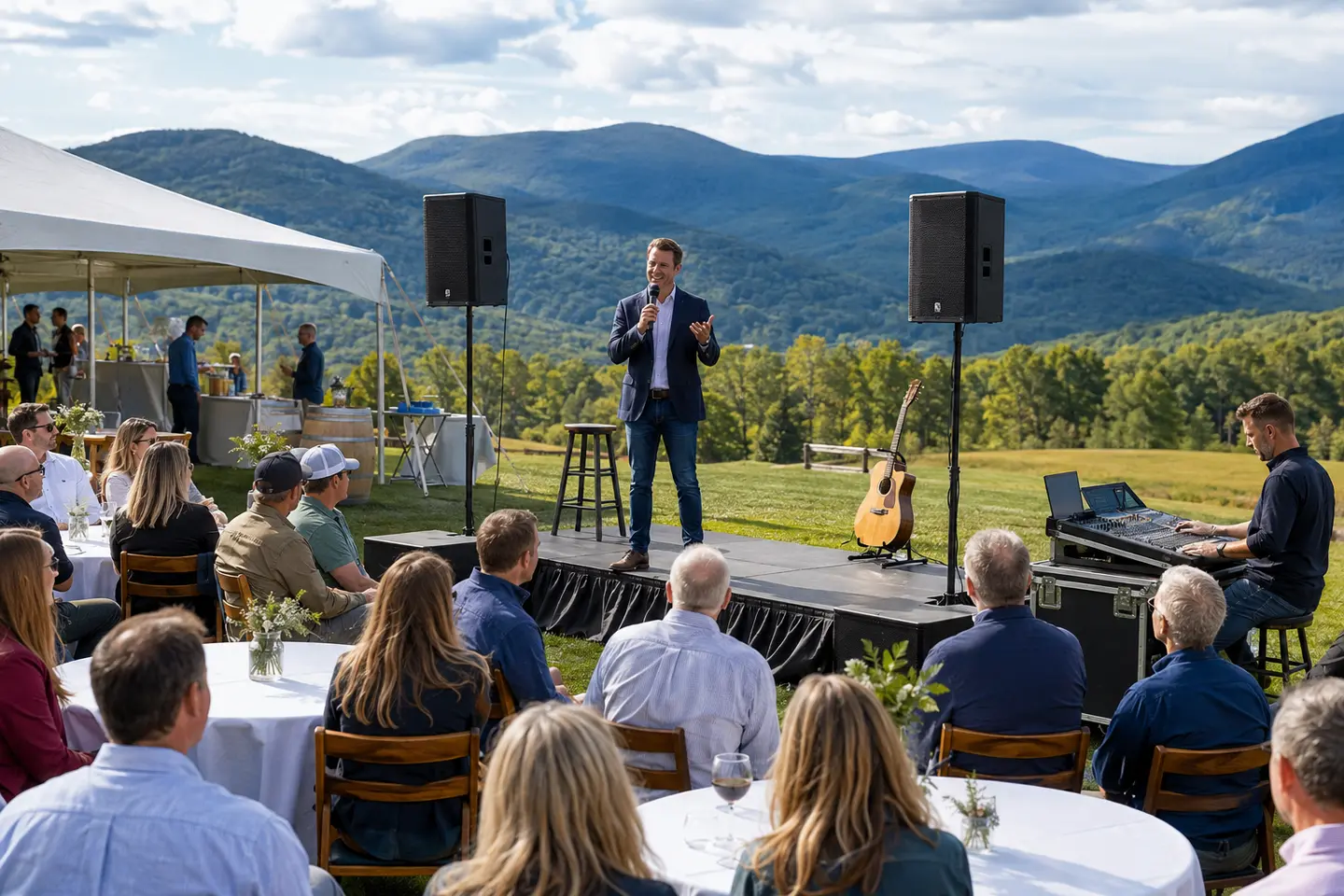
Professional PA loudspeakers, mixer, and wireless microphone equipment arranged for a Central Virginia presentation
Hands-free event speech

The microphone, clothing, wireless path, and PA work as one system.

Presenter movement, placement, frequency coordination, coverage, sound checks, and backups belong in the same practical plan.

Plan your event →
Planning FAQ

Answers before event day.

What is a lavalier microphone?

A lavalier is a small microphone worn on clothing, often near the upper chest. It can leave the speaker’s hands free, but placement, clothing, movement, wireless conditions, mixer integration, loudspeaker coverage, and operation all affect the result.

Is a lavalier microphone better than a handheld microphone?

Neither format is always better. A lavalier supports hands-free speaking; a handheld usually places the capsule closer to the mouth and can be easier to pass or control. The presenter, clothing, movement, room, program, and operating plan determine the practical choice.

Where should a lavalier microphone be clipped?

Placement is confirmed during the sound check with the actual speaker and clothing. It should be secure, reasonably close to the voice, clear of rubbing fabric, jewelry, hair, and badges, and routed with the speaker’s permission so movement does not pull the cable or bodypack.

Can I rent only a lavalier microphone and connect it to a speaker?

Sometimes, but only when the capsule, bodypack, receiver, receiver output, mixer or powered-speaker input, gain structure, frequency range, and operating method are compatible. Share exact equipment model and connection details so the complete path can be confirmed.

Can a wireless lavalier microphone be used outdoors?

It can be considered when wind protection, weather, power, protected equipment positions, movement, receiver placement, audience coverage, and the organizer’s weather plan are confirmed. Outdoor suitability and included equipment are stated in the written proposal.

How many wireless lavalier microphones can be used at the same event?

The answer depends on the specific systems, available legal spectrum at the location, tuning ranges, other wireless users, receiver and antenna setup, mixer channels, and operating plan. Channel quantities and availability are confirmed after the event details are reviewed.

How much does lavalier microphone rental cost in Charlottesville?

Pricing depends on quantity, compatible receivers and mixer inputs, PA integration, delivery, access, fitting and sound-check time, rehearsal, technician operation, event duration, travel, backup needs, and teardown. Blue Ridge Sound provides price and inclusions in a written proposal.
Get the right system on the first trip.

Send the venue and event details. Blue Ridge Sound will recommend a practical rental or staffed production scope.

Start your quote →