
Reliable Wedding Sound Starts with the Right Team
A smooth wedding sound teardown starts with knowing who handles shutdown, packing, and loading—and how much time the venue allows. Confirm these details with your audio provider before the wedding so you and your guests can enjoy the final song without worrying about equipment.
Your microphones, music playback, and speakers need to work together so guests can hear vows, speeches, and music clearly. Ask your provider who will check the sound before guests arrive and manage it throughout the celebration.
Blue Ridge Sound provides event sound in Charlottesville, VA and across Central Virginia, including Albemarle County, Crozet, Waynesboro, Staunton, Harrisonburg, Ruckersville, Scottsville, and the Shenandoah Valley. We help engaged couples, wedding planners, venue coordinators, and corporate event organizers with professional JBL and Bose public-address (PA) systems and full setup-to-teardown service. Our services include wedding ceremony sound, reception DJ/MC and sound, corporate events and audiovisual (AV) support, live band support, event lighting and uplighting, and no-power solutions for barns, vineyards, and outdoor venues.
Here are four things to discuss with your audio provider:
- Microphones: Confirm microphone coverage for the officiant, couple, and anyone giving a speech.
- Coverage Across Spaces: Ask how sound will be managed in each ceremony, cocktail, and reception area. Our guide to digital mixers for live events offers optional background on how providers manage sound across spaces.
- Speakers: Discuss speakers suited to your guest count and dance floor.
- Cable Routes: Confirm where cables will run so they stay out of guest traffic.
Ask About Equipment Care and Backup Plans
You do not need to inspect the inside of a speaker or mixer to choose a provider. Ask how they maintain their equipment and what they would do if a microphone, speaker, or playback device stopped working.
Behind-the-scenes equipment inspection is technical work for your audio provider. For wedding planning, focus on whether the equipment is maintained and whether the team has a backup plan.
For a long summer reception, ask your provider how they protect equipment from heat and what backup options they bring.
Keeping Sound Reliable Throughout the Celebration
Loose connections, overheating, or incorrect volume settings can interrupt audio. Ask who will monitor the sound and respond if a problem occurs.
Key risk areas include:
- Speech and Music Levels: Who manages the volume throughout the event? Our guide to gain structure and feedback prevention offers background on clear sound and preventing microphone squeals—you do not need to master the technical details.
- Cables and Connections: How does the team check cables and connections before guests arrive?
- Backup Playback: What backup music playback is available if the main device stops working?
A backup plan helps keep the celebration moving if equipment fails. Ask your provider whether they bring backup music, a spare microphone, and an alternative way to play speeches and music.
How Your Audio Team Handles Wedding Sound Teardown
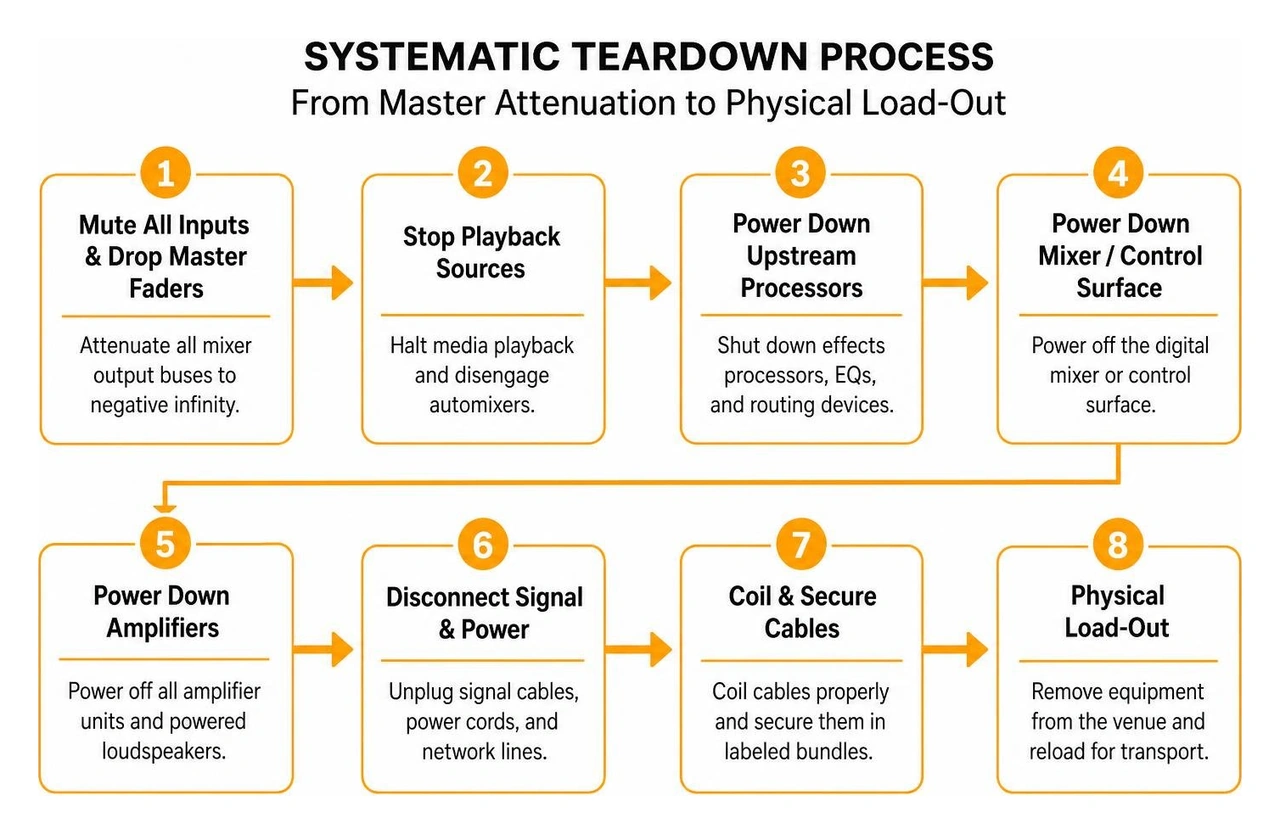
Leave equipment shutdown to the designated audio team. Before the event, confirm who is responsible and ask guests or volunteers not to unplug or move equipment while the team is working.
Confirm that your provider's teardown service covers:
- Final Music Cutoff: Coordinating the final song and music cutoff with your planner and venue.
- Equipment Shutdown: Handling professional shutdown of the sound system.
- Microphone Collection: Collecting microphones and their accessories from each event area.
- Equipment Checks and Packing: Checking and packing speakers, mixers, and cables.
- Loading and Departure: Clearing the agreed loading route before the venue deadline.
Pre-Pack Inspection and Rapid Wedding Sound System Teardown
After shutdown, your team checks the equipment and packs it into protective cases. Careful packing helps keep microphones and other delicate equipment clean and protected.
- Microphone Care: Confirm that the provider collects microphones and handles cleaning according to manufacturer guidance.
- Wireless Performance: Ask whether the team records wireless performance for future venue planning. Our wireless microphone frequency coordination guide offers optional background on avoiding radio interference.
- Cable Packing: Leave careful cable packing to the audio team.
- Equipment Checks: Confirm who checks for damage and flags equipment needing repair.
- Stands and Accessories: Make sure the provider's collection checklist covers stands and accessories in every event space.
Loading Logistics and Mountain Venue Teardown Challenges
Moving heavy audio equipment from the reception space back to the vehicle takes a clear plan for moving and loading gear. Discuss access with your provider, especially at estate properties, historic venues, and mountain resorts where routes or vehicle access may be limited.
Moving gear across remote settings demands specialized planning, as seen in this case study on high-altitude wedding DJ gear transport, where equipment had to be ferried via gondola cars under strict space and weight limits.
To maintain efficiency and safety:
- Vehicle Access: Confirm where the provider's vehicle can park for equipment removal.
- Loading Route: Tell your provider about slopes, stairs, narrow doors, and any other access restrictions.
- Venue Deadline: Obtain the venue's actual equipment-removal deadline so your provider can schedule enough crew time to pack, load, and leave.
Venue-Specific Audio Logistics: Multi-Zone, Outdoor, and Battery Setups
Every wedding venue has different sound and power needs. Ask your provider how they will adapt setup and teardown to your venue.
| System Attribute | Battery-Powered Portable Rig | Traditional High-Output Wired Rig |
|---|---|---|
| Primary Use Cases | Remote ceremony lawns, mountain overlooks, cocktail patios | High-energy receptions, multi-zone tents, large ballrooms |
| Power Access | Internal rechargeable batteries; no venue outlet needed during use | Dedicated 15- or 20-amp electrical circuits, confirmed with the venue |
| Setup & Teardown Time | 10–15 minutes total | 45–90 minutes depending on the number of audio inputs |
| Sound Coverage | Smaller ceremony and cocktail spaces | Larger reception spaces |
| Cable Planning | Fewer cables to route around guests | More audio and power cables to plan for |
| Packing and Loading | Compact setup for the provider to collect | More equipment, cases, and crew time |
Portable Battery Rigs vs. Traditional Wired Systems
For ceremonies in fields, vineyard knolls, or wooded clearings without electrical access, ask about battery-powered speakers and playback equipment as an alternative to a generator. For rustic locations, use our no-power venue sound planning guide to discuss how long the sound needs to run—from guest arrival through the recessional—with your provider.
Compact battery-powered systems can be quick for your provider to pack away after a ceremony. For a lively reception, ask whether speakers powered by venue electricity and subwoofers—speakers that handle deep bass—are a better fit for your guest count and dance floor.
Managing Multi-Zone Venues and Distributed Systems
Expansive estates often require separate audio distribution for the ceremony lawn, outdoor cocktail courtyard, dinner tent, and indoor dancing lounge. Managing audio across these environments requires a structured multi-space wedding audio plan.
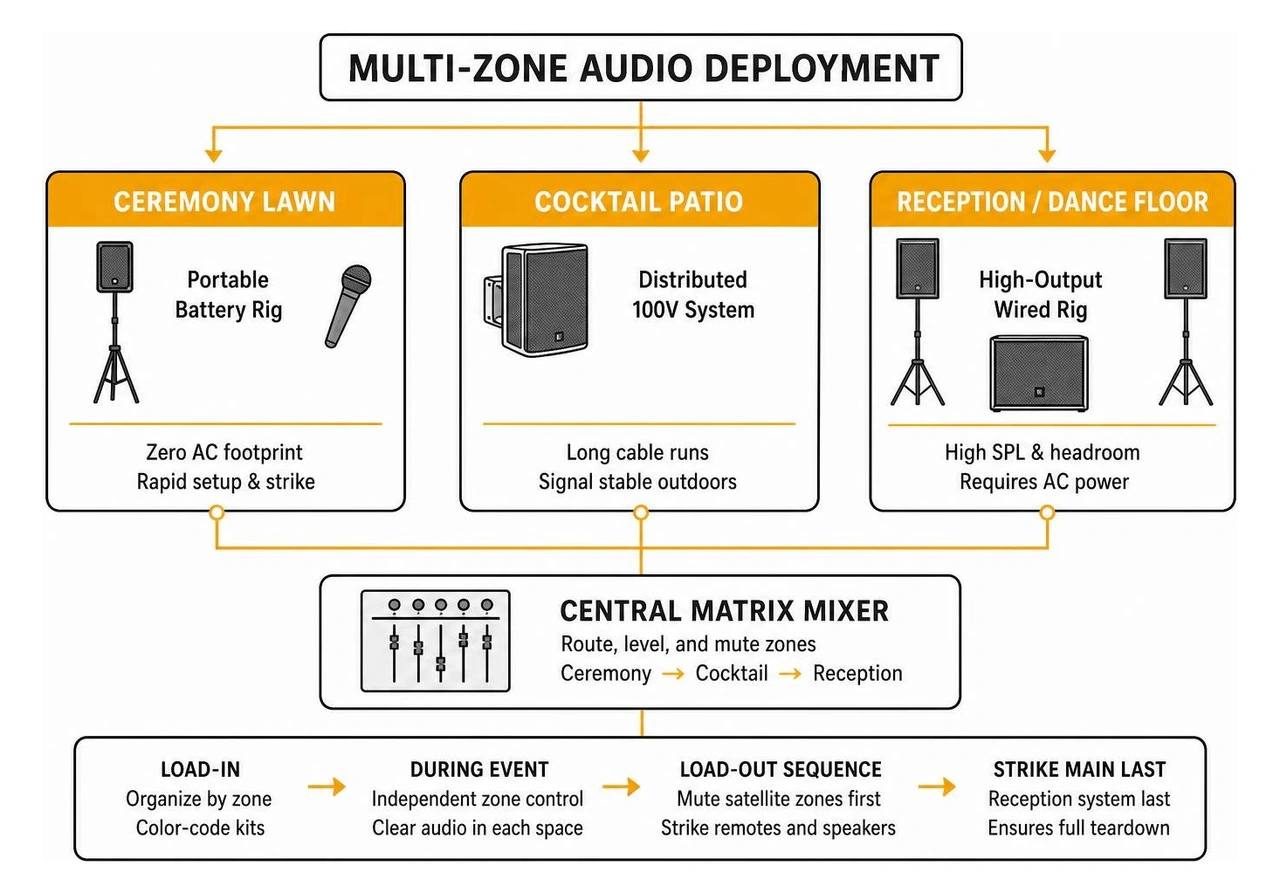
This multi-space venue example illustrates sound coverage across different wedding areas. Ask your provider how they will cover each space and manage cable routes around guests.
Outdoors, microphone choices matter alongside speaker placement. Our outdoor wedding microphone guide explains how wind protection and microphone placement help guests hear vows clearly outdoors. Agree with your provider which areas can be packed first, keeping sound available wherever guests still need it.
Audio Rental Costs, Labor Rates, and Smart Budget Strategies
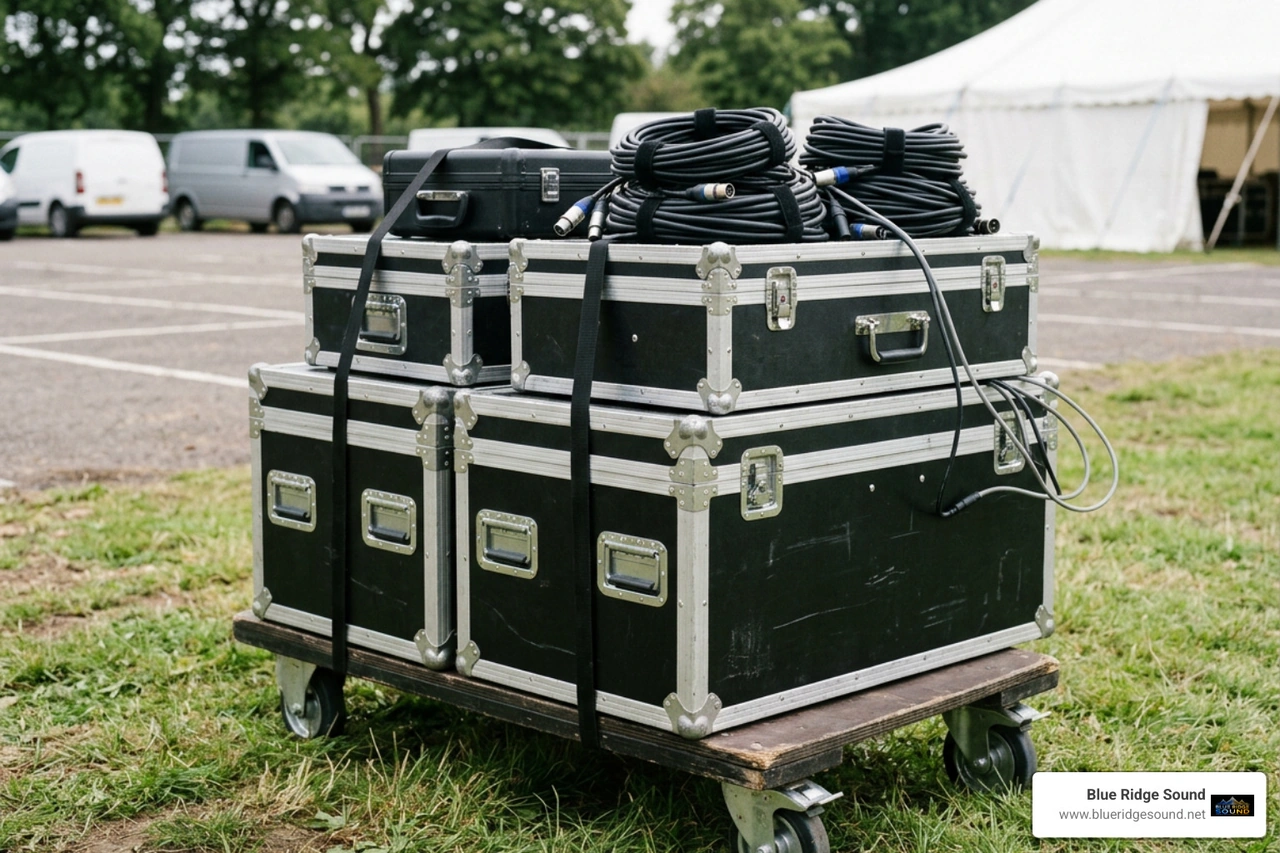
Understanding what drives production pricing helps couples allocate AV budgets effectively. In the United States, professional wedding sound system rentals average between $400 and $3,500, with most comprehensive, multi-zone ceremony-and-reception setups ranging from $700 to $1,500.
For local planning, reviewing our breakdown for a wedding sound system rental in Charlottesville alongside our wedding DJ and sound cost guide helps clarify pricing variations based on guest count, system sizing, and coverage footprint.
Typical cost components include:
- Ceremony-Only PA (Dry Hire): $250 to $600 (hardware pickup, DIY operation, self-return).
- Full Multi-Zone Production with Sound Technician (Wet Hire): $1,500 to $3,500+ (delivery, event sound management, live sound adjustments, and teardown).
- Dedicated Sound Technician: $50 to $100 per hour ($400 to $1,200 per event day).
- Outdoor Logistics Premium: Adds 20% to 40% due to expanded cable runs, weather-protection equipment, and extra setup and teardown labor.
Breaking Down Dry Hire vs. Wet Hire Audio Packages
Choosing between dry hire (renting equipment alone) and wet hire (renting equipment with an on-site technician) significantly impacts event-day stress and teardown responsibilities.
For any wedding ceremony audio rental, check whether the quote includes delivery, setup, operation, teardown, and return. If you are comparing an equipment-only package, ask about damage policies and deposits before you book.
Wet hire includes a dedicated technician who handles sound checks, speech volume adjustments, prevention of microphone feedback—the squealing sound microphones can produce—and equipment removal within the venue's deadline.
Avoiding Cost Traps in Your Wedding Sound System Teardown
To keep costs manageable without compromising sound quality:
- Consolidate Audio Zones: Consider placing cocktail areas next to ceremony or reception spaces so your provider can assess whether one speaker setup can cover both areas.
- Combine DJ and Live Audio Support: Ask whether one entertainment and production provider can cover both needs, and compare quotes for overlapping delivery and labor charges.
- Check Venue Sound Systems: Ask whether the venue has a built-in sound system suitable for speeches, with extra speakers and bass support rented only where needed for dancing.
- Avoid Teardown Overtime Fees: Confirm that your provider's equipment-removal schedule matches the venue's deadline, and ask about any overtime charges before booking.
Frequently Asked Questions About Wedding Sound Teardown
How long does a typical wedding sound system teardown take?
A professional two-person audio crew completes a standard single-room reception teardown in 45 to 60 minutes. Larger estate weddings with several sound areas—such as an outdoor ceremony lawn, cocktail patio, and large reception tent—generally require 60 to 90 minutes. This includes equipment shutdown, cable packing, loading protective cases, and clearing the venue's loading area before its deadline.
What is the difference between dry hire and wet hire teardown responsibilities?
With dry hire, or an equipment-only rental, confirm which shutdown, packing, and return tasks are your responsibility. With wet hire, or technician-supported service, confirm that the provider handles shutdown, equipment checks, packing, and loading.
How do outdoor and remote venues affect teardown labor costs?
Outdoor and remote locations often incur higher labor fees (typically a 20% to 40% premium) due to long cable routes, uneven ground that makes carts difficult to use, weather protection, and longer or more difficult routes between the event space and the vehicle.
Conclusion
A successful wedding sound setup is about clear vows, a lively dance floor, and what happens after the final song. An organized teardown protects the equipment, respects venue schedules, and helps the celebration end calmly.
At Blue Ridge Sound, we plan everything from the first sound check to the final packed case, so you can focus on your celebration. Planning a celebration in Central Virginia? Explore our professional wedding DJ and MC services, then request a quote at blueridgesound.net or call (434) 872-1893.